Guides
Silver forming guide: hammers, stakes, mandrels and shape control
Silver forming guide: which hammer, stake and mandrel does which job, when to stop and anneal, and how to measure wall thickness and shape at every stage.
What to take away
- Forming moves metal by controlled plastic deformation. It cannot identify an unknown alloy or remove a defect.
- The hammer face and the support work as one pair. Change either and the mark and the movement change.
- Anneal at set points, before the stock reaches a limit you cannot read.
- Measure thickness, width, curvature and symmetry at named spots, not by average mass.
- Stop for a crack, a fold, a thin spot or sudden stiffness. Those do not hammer out.
Silver forming covers bending sheet and wire, forging a section, sinking a shallow bowl, raising a vessel, and shaping on a mandrel. Each method moves metal somewhere different. Before the first blow, say what moves, what stays fixed, and how you will check the result.
Read the stock before you hit it
Write down the alloy, the supplier and the batch. Add the form, the starting dimensions and the temper. Note any prior soldering or heating.
Most bench forming uses fine silver or sterling. Sterling is a legal description, not a look: the FTC's jewelry guides treat it as deceptive to mark or describe a product as "Sterling" unless it is at least 925/1,000ths pure silver. Record the fineness stamped on the stock or stated on the invoice, because the two alloys respond differently to hammering and heat.
Stock intake record
- Alloy, supplier and batch
- Form, starting dimensions, temper
- Prior soldering or heating
- Plated, filled, laminated or repaired
- Stone-set or historic piece
- Reference lines and fixed datum
Unknown, plated, filled, laminated, repaired or stone-set work needs its own assessment first. So does any historic piece. Hammering it or heating it can destroy what made it worth keeping.
Scribe reference lines where they will survive the forming pass. On a symmetrical part, measure from a fixed datum. Do not copy the first side after it has already moved.
Match the hammer to the stake
A polished face over a clean stake moves metal with few sharp marks. A damaged, dirty or mismatched pair stamps every blow into the surface, and you will file it out later at the cost of the thickness you needed.
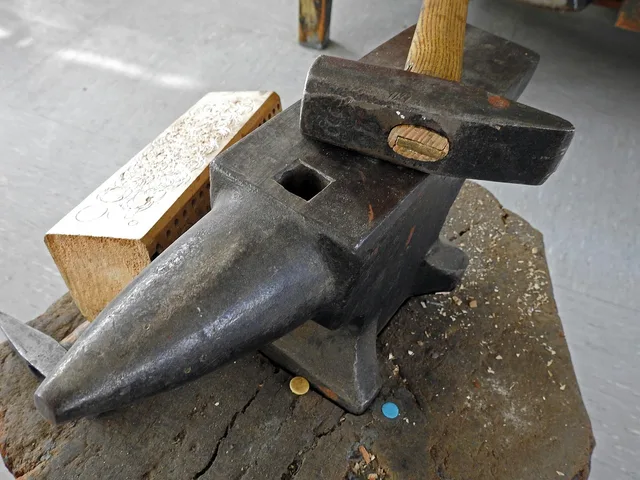
Pick the pair by face shape and radius, face finish, hammer mass, and handle condition. Then check the stake, mandrel, anvil or sandbag contour. Finally check access: can you reach the spot without your knuckles hitting the stake?
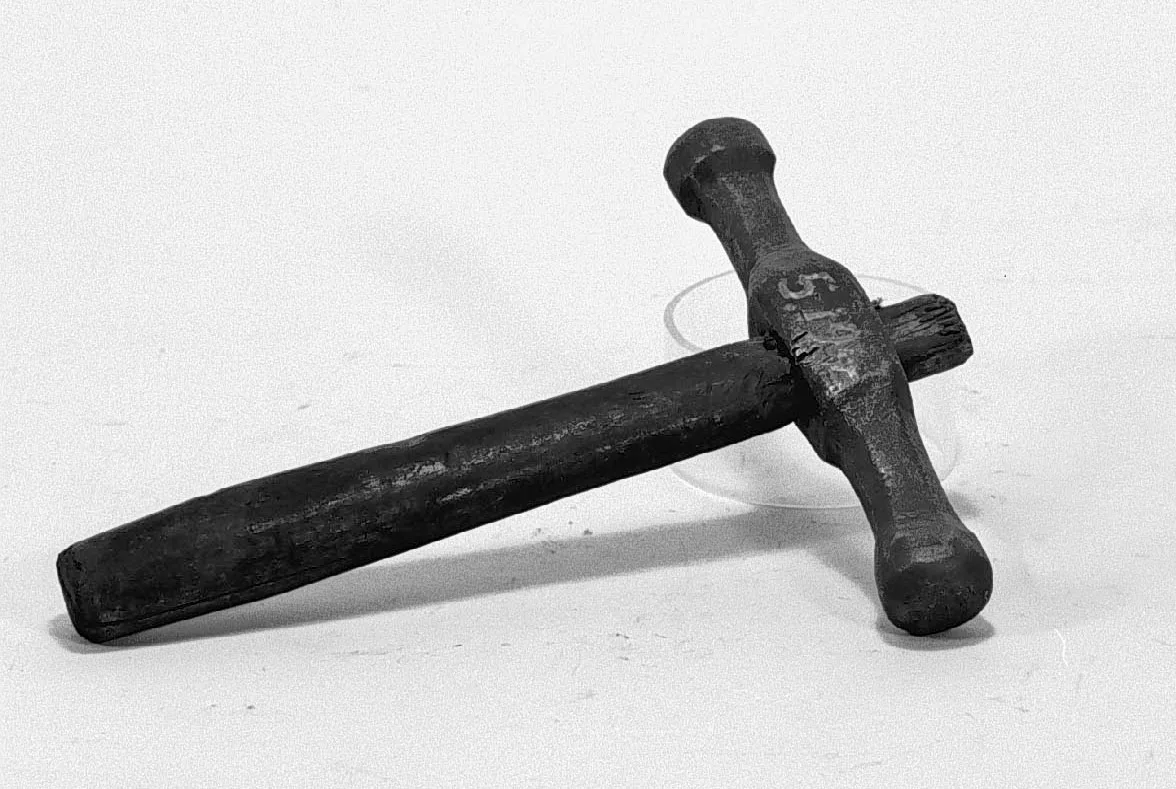
The common silversmithing pairs, by job:
- Rawhide, nylon or wooden mallet:
- bending and truing without thinning or marking the surface.
- Raising hammer:
- compressing sheet over a stake, course by course.
- Planishing hammer:
- smoothing and evening a formed surface with light, overlapping blows.
- Cross peen or forging hammer:
- spreading a section in one direction.
- T-stake or horn stake:
- bending, raising and shaping curves and cones.
- Mushroom (dome) stake:
- planishing curved surfaces such as bowl walls.
- Sandbag or wooden block with a hollow:
- sinking a shallow form.
- Ring mandrel (triblet):
- truing rings to a round contour.
- Bracelet mandrel, round or oval:
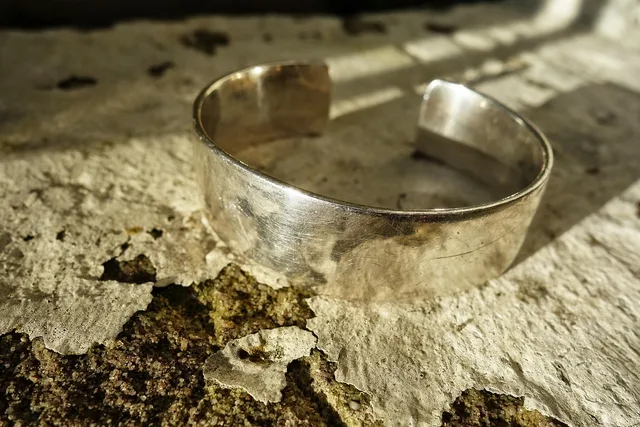
- forming cuffs and bangles.
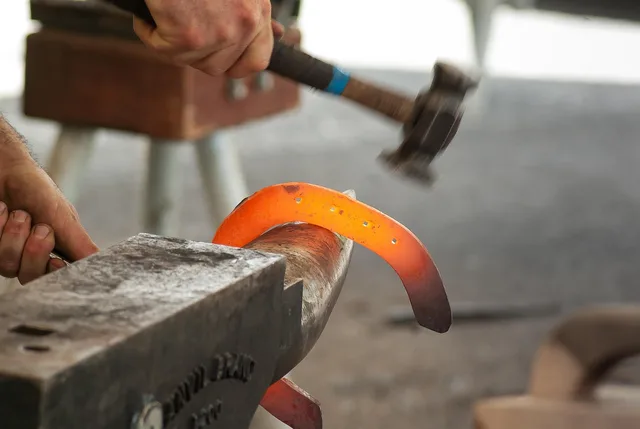
MIT OpenCourseWare's forging lesson shows that hammer-head shape changes how metal spreads, and that a cross peen moves stock differently from a round face. Its examples are blacksmithing at blacksmithing scale. Silver stock, silver temperature and jeweller's tools need their own limits.
Form in overlapping passes
Use light, overlapping blows and move the work in a set order. One heavy blow leaves a dent, a thin spot or a stretched edge that costs more time to recover than the whole pass took.
| Method | What moves | What to check |
|---|---|---|
| Bending | Angle or curvature | Neutral alignment, springback, edge condition |
| Forging | Section under impact | Thickness, width, length, straightness |
| Sinking | Sheet into a hollow support | Depth, rim shape, folds, thickness |
| Raising | Sheet compressed over a stake | Course angle, wall thickness, rim, symmetry |
| Mandrel forming | Stock toward a known contour | Size, roundness, taper, surface |
A final-size mandrel is not proof that a ring is round. Check at several orientations, then measure the diameter or circumference the job calls for.
Watch work hardening as it builds
Every forming pass changes the material's condition. You will feel it before you can measure it: springback grows, the metal pushes back harder, the tool answers more sharply, and a bend that ran smoothly stops wanting to continue.
Stop or continue forming
Crack, bright line, edge split, fold or delamination?
Stop at once and assess
Continue, watch springback and pushback
Set your inspection and annealing points before the stock reaches a limit you cannot read. Stop at once for a crack, a bright line, an edge split, a fold or a delamination. Stop too if the metal behaves unlike the alloy on the batch record.
Anneal to a written procedure
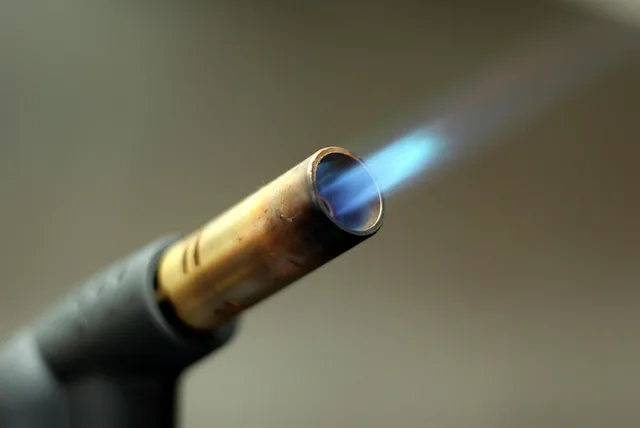
Annealing is not "heat until it looks soft." The range, the time, the atmosphere and the indicator all follow from the alloy. The cooling method and the cleanup follow from the section and the next operation. Use the supplier's data or a written process specification.
Anneal procedure checklist
- Range, time, atmosphere, indicator
- Cooling method and cleanup
- Supplier data or written spec
- Torch, ventilation, fuel controls
- OSHA ventilation and respiratory rules
- Remove coatings, adhesive, stones
- Never anneal unidentified material
Torch, ventilation, fuel, hot-metal and chemical controls are the same ones soldering requires. OSHA sets the ventilation and respiratory requirements that apply in your shop, and the equipment maker's safety data sheet sets the handling rules for each chemical. Remove coatings, adhesive and stones only under an approved plan. Never anneal material you cannot identify.
Hold the surface and the dimensions
Inspect and wipe the hammer face and the support before every course. Rotate the work the same way each pass so the marks stay even.
Measure wall or section thickness at the spots you named at the start. Average mass hides a thin wall. Leave metal for the finishing you planned, because filing and polishing remove material and cannot put a thin area back.
Keep a forming record
Log the stock and the starting measurements. Add the tool pair, the course direction and the blow pattern. Record the annealing cycle and the readings after it. Note defects, corrections and the final inspection.
For repeat work, photograph the piece at the same orientation each time. Drift shows up in a matched set of photographs long before it shows up in a finished template.
Common questions
Does annealing return silver to its original condition?
A correct anneal relieves the effects of work hardening. It does not reverse thinning, dents, cracks, contamination or lost dimensions. Those are forming and finishing problems, and they need forming and finishing answers.
Which hammer should a beginner buy first?
Buy after instruction and after you have a defined project. Face shape, face finish, mass and the support all have to fit the operation, so a hammer chosen before the job is a guess.
Why does a formed band spring open?
Alloy, material condition, section, bend radius and forming method all feed elastic recovery. Measure the gap and correct it in controlled stages rather than forcing the ends together.
Can I hammer directly on a steel block?
Only when that contact pair gives the movement and the surface the job needs, under a process you were trained in. A steel block leaves marks that a softer support would not, and those marks come out of your finishing allowance.
In this guide
- Anneal and Form Silver Band: Nine Bench StagesAnneal and form silver band strip in nine bench stages: process card, strip measurement, anneal under exhaust, pickle, mandrel passes, and final release.
- Raising, sinking, forging, bending, and die forming comparedSilver forming methods compared by metal movement, tooling, stock limits, section change, surface effects, repeatability, measurement, and shop safety.
- Silver forming checklist: hammer, stake, annealing, measurement and surface controlA bench checklist for silver forming: stock records, hammer and stake condition, annealing cycles, released measurements and surface limits.
- Silver forming problems: cracks, wrinkles, springback and tool marksSilver forming problems guide for cracks, wrinkles, springback, uneven thickness, dents, tool marks, root-cause evidence, correction limits, and rejection.
- Forming a tapered silver cuff from measured stock caseTapered silver cuff case using a measured blank, section map, staged forging and bending, controlled annealing, released-shape checks, and final records.