Reviews
Part of Silver fineness marks: what 999, 958, 925 and 800 claim
Fine silver vs sterling silver: what the names don't tell you
Fine silver vs sterling silver, Argentium-type alloys, and silver plate: what each name does and does not tell you about the metal.
What to take away
- Fine silver, sterling, proprietary sterling-family alloys, and silver plate describe different material or construction categories.
- Fineness identifies silver content by mass, but it does not give the full recipe, temper, coating thickness, or repair history.
- A proprietary alloy name should follow supplier documentation; do not assign it from appearance or a 925 mark.
- Silver plate is a surface layer over another material, so cutting, heating, polishing, and repair can expose the substrate.
- Product descriptions should state what evidence supports the material claim and identify plated construction clearly.
These categories are not a quality ladder. The best choice depends on the form, fabrication sequence, finish, service conditions, repair plan, legal market, and records available for the stock.
Quick comparison
Material basis
- Fine silver
- Very high silver fineness
- Sterling silver
- 925 parts per thousand silver under the applicable claim
- Argentium-type alloy
- Named proprietary silver-alloy family
- Silver plate
- Silver coating over a different material
Typical workshop question
- Fine silver
- Is its softness suitable for this form?
- Sterling silver
- What is in the remaining alloy fraction?
- Argentium-type alloy
- Which exact grade and supplier instructions apply?
- Silver plate
- Will work expose or damage the base?
Main identification limit
- Fine silver
- Fineness does not state temper or process history
- Sterling silver
- A 925 mark does not reveal the full recipe
- Argentium-type alloy
- Appearance cannot establish brand or grade
- Silver plate
- A surface test may not characterize the substrate
Read across the four categories, the differences that matter are fineness, construction, and working behavior. Fine silver is the softest and most ductile of the four; sterling holds spring better, and the tarnish-resistant sterling-family alloys resist tarnish better still; silver plate behaves as its base metal does, with its silver layer only as good as its thickness and wear. Beyond that, the properties of a specific batch come from the supplier's documentation, not from the category name.
Fine silver
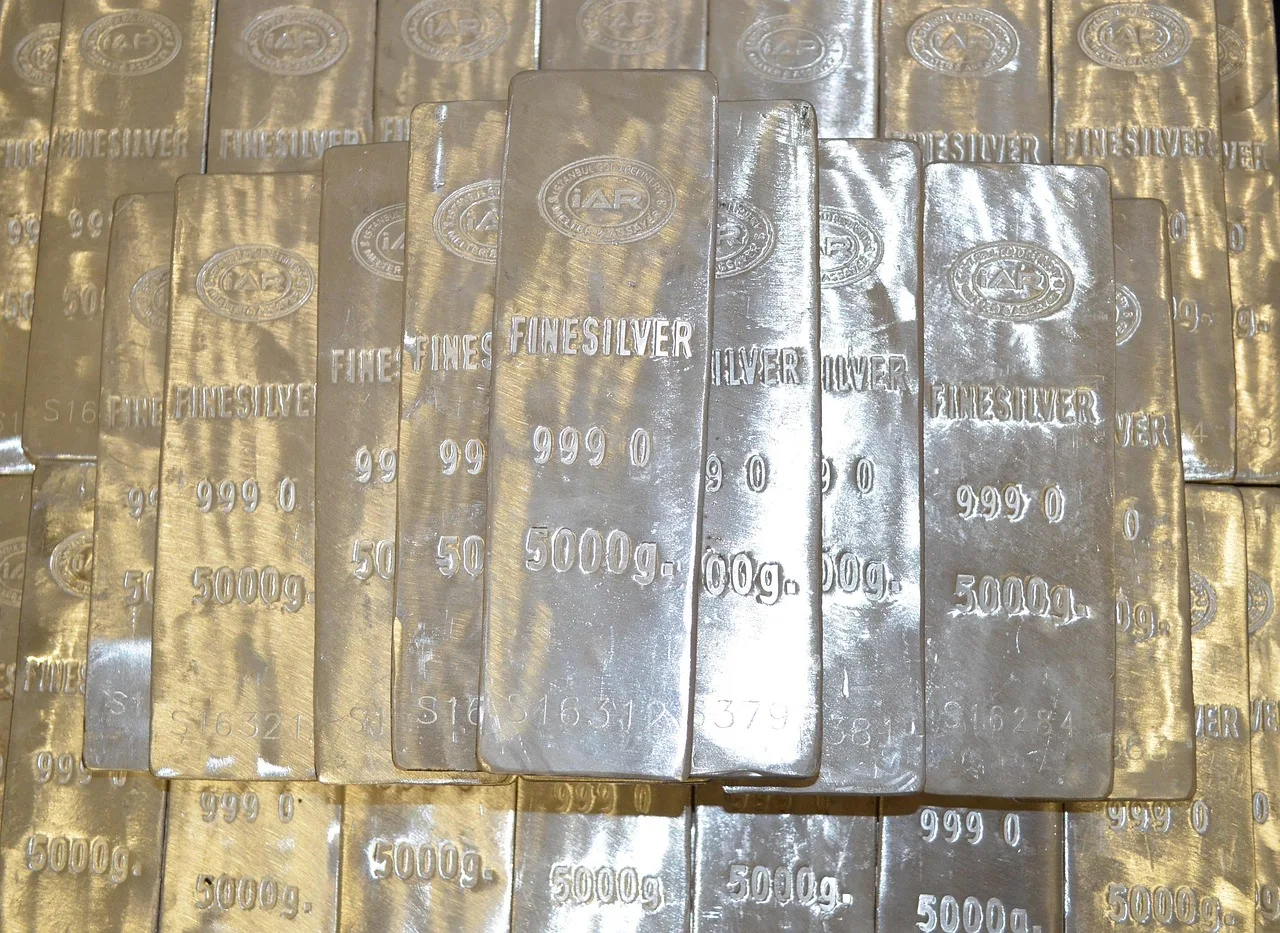
Fine silver generally means silver at 999 millesimal fineness, or 999 parts silver per 1000, with the exact permitted description depending on jurisdiction. It is often more ductile and softer than conventional sterling, but product form, temper, thickness, and prior working still affect what the maker experiences.
Britannia silver is the other statutory fineness a reader will meet: 958 parts per thousand, defined in the United Kingdom's Hallmarking Act 1973 and distinct from fine silver at 999 and sterling at 925. In the UK, silver is tested and struck by the assay offices, so the hallmark records the tested standard rather than the maker's process, temper, or construction.
That softness can help with bezel walls, fold forming, and some raised forms. It can work against a design that needs spring, thin unsupported sections, or resistance to denting. Do not choose it solely because it contains more silver.
Sterling silver
Sterling combines a 925 silver-content claim — 925 parts silver per 1000 — with an alloy fraction intended to improve useful properties. Copper is the usual balance, but 925 alone does not disclose every remaining element. Casting grain, sheet, wire, findings, and solder may also come from different recipes or production histories.
The US Federal Trade Commission's revised Jewelry Guides statement distinguishes claims about precious-metal composition from claims about surface-applied metal and explains that an advertisement's overall impression matters. It is US marketing guidance, not a universal hallmarking rule or a workshop specification.
US law also reaches the mark itself: the National Gold and Silver Stamping Act requires that a quality mark applied to a precious-metal article be accurate within the statute's tolerance. With the Guides, that is the machinery a US buyer has, and unlike the UK the United States has no assay office or statutory hallmark, so a US quality mark is a claim rather than an independent test result.
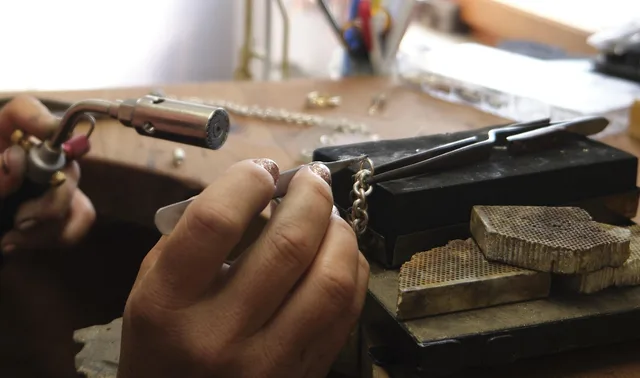
For fabrication, ask the supplier about composition range, temper, annealing guidance, casting use, solder compatibility, and recycling restrictions. Label clean offcuts by product and batch.
Argentium-type alloys
Argentium is a trademarked family name, not a generic synonym for any tarnish-resistant sterling. Similar-sounding or visually similar stock should not inherit the name. Obtain the exact product designation and technical instructions from the documented supplier.
Different grades within any proprietary family may not share one composition or process window. Heat treatment, annealing, soldering, fusing, pickling, polishing, and scrap-return recommendations can differ from the routine a shop uses for conventional copper-bearing sterling.
In records and customer descriptions, use the named alloy only when the purchasing trail supports it. If the identity has been lost, call the stock unknown silver alloy until suitable evidence restores a narrower description.
Silver plate
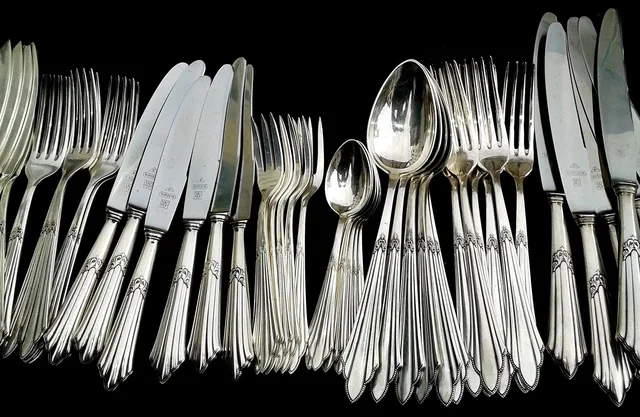
Silver plate is construction, not a bulk silver alloy. A silver layer covers another material, commonly copper, brass, or nickel silver, and the base responds differently to tools, chemicals, heat, wear, and corrosion. Marks such as EPNS record the construction rather than a silver fineness, and no fineness number tells you how thick the silver layer is. Hollow forms, filled handles, soldered seams, or multiple coatings add further uncertainty.
Silver plate repair checks
- Inspect worn edges and joins
- Check fasteners and hidden surfaces
- Avoid aggressive polishing
- Watch filing, engraving, resizing, soldering
- Include replating in scope and price
Historic catalog and museum language can also use the word plate in ways that require context. The Metropolitan Museum of Art's catalog of early American silver documents solid silver objects and historical terminology; it should not be used to convert an unidentified modern plated object into a solid-silver attribution.
Before repair, inspect worn edges, joins, fasteners, and hidden surfaces. Aggressive polishing can thin a coating. Filing, engraving, resizing, or soldering can break through it. A replating decision belongs in the scope and price, not as an unmentioned finishing step.
Choose by task
| Task | Questions to resolve before selection |
|---|---|
| Thin bezel | Ductility, wall thickness, stone risk, final security |
| Structural clasp | Spring, wear, section thickness, hardening, repairability |
| Cast component | Supplier casting grade, shrinkage data, porosity control, finishing allowance |
| Patinated surface | Alloy response, sample result, skin contact, coating plan |
| Repair | Known material, coatings, solder history, heat-sensitive parts, disclosure |
Run process trials on labeled offcuts from the actual batch when behavior matters. A successful trial supports that stock under those conditions; it does not identify unknown metal elsewhere.
Common questions
Is fine silver always better than sterling?
No. Higher fineness does not make one material suitable for every structure, finish, or wear condition.
Is every 925 alloy Argentium?
No. A fineness number does not establish a proprietary product name.
Can silver plate be soldered like sterling?
Do not assume so. The substrate, coating, old solder, fills, and heat-sensitive parts must be identified first.
Which category tarnishes least?
Tarnish depends on alloy, surface, environment, storage, wear, and care. Compare documented stock with a controlled sample instead of promising a universal result.