Guides
Silver fineness marks: what 999, 958, 925 and 800 claim
Read a silver fineness mark grade by grade: what 999, 958, 925 and 800 claim, which frameworks stand behind them, and what the stamp leaves unsaid.
What to take away
- Fineness counts parts of silver per thousand by mass, so 925 means 925 parts in every 1000.
- The UK guidance lists 800, 925, 958 and 999 as recognized silver marks, and other grades are also encountered.
- Which wording a mark may carry depends on the jurisdiction where the piece is sold.
- The number never names the other parts, and it says nothing about nickel, lead, cadmium or allergy.
- When the stamp is the only evidence, treat it as a claim and ask for the paperwork.
What the number on the stamp measures
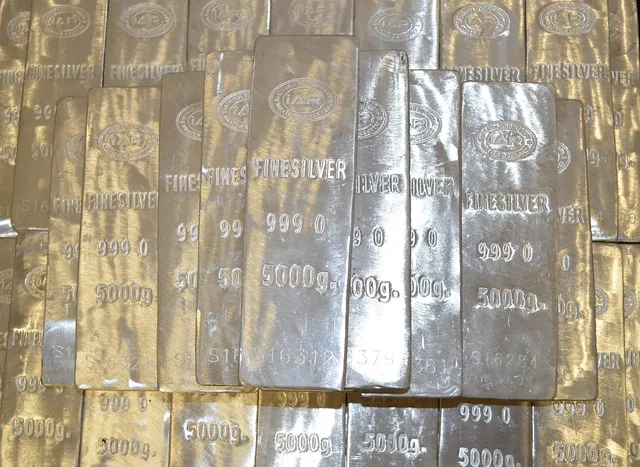
A fineness number counts parts of silver per thousand. A 925 stamp means 925 parts silver in every 1000, and 999 leaves one part for everything else. Millesimal fineness expresses precious metal in parts per thousand by mass, whatever the object's shape, weight or maker.
The number is a share of mass, not a description of the metal. High-purity silver is soft and ductile, and alloying changes hardness, castability, tarnish behavior and color. The stamp tells you how much silver is present, not how the remainder shapes those properties at the bench.
Grades from 999 down to 800
Seven numbers turn up on silver. The trade uses 999 fine silver, 958 Britannia in the UK system, and 925 sterling silver, while 900 coin silver, 835 and 830 are also encountered. Which descriptions are permitted depends on jurisdiction, so the table lists what each number leaves open.
| Mark | Name | Where it appears | Left open by the number |
|---|---|---|---|
| 999 | Fine silver | Across the trade and on the UK list | Permitted wording in your jurisdiction |
| 958 | Britannia | The UK system | Whether the name carries weight elsewhere |
| 925 | Sterling | The UK list and the common sterling claim | The other 75 parts |
| 900 | Coin silver | Encountered | Permitted description where you sell |
| 835 | No name given | Encountered | Permitted description where you sell |
| 830 | No name given | Encountered | Permitted description where you sell |
| 800 | No name given | The UK guidance's recognized list | Permitted description where you sell |
Silver fineness compared
999 fine
- Purity
- 999/1000
- Hardness
- softest
- Ductility
- highest
- Tarnish
- slowest
- UK mark
- 999
958 Britannia
- Purity
- 958/1000
- Hardness
- mid
- Ductility
- high
- Tarnish
- slow
- UK mark
- 958
925 sterling
- Purity
- 925/1000
- Hardness
- hardest
- Ductility
- moderate
- Tarnish
- faster
- UK mark
- 925
Who stands behind the stamp
In the UK, the Hallmarking Act 1973 underpins the system described in the UK hallmarking guidance. That guidance sets out the sponsor, fineness and assay office elements, and lists recognized silver fineness marks including 800, 925, 958 and 999. The UK's assay offices are in London, Birmingham, Sheffield and Edinburgh.
For U.S. precious-metal representations and quality marks, the FTC Guides for the Jewelry, Precious Metals, and Pewter Industries and the National Gold and Silver Stamping Act are relevant, and US hallmarking law covers when a piece may be called sterling. Neither framework identifies an unhallmarked object, and UK rules do not govern another country.
What a 925 stamp leaves unsaid
A 925 stamp names the silver and nothing else, because the other 75 parts are not named by the number. Copper is the usual addition in sterling, and a common formulation is 925 parts silver and 75 parts copper per thousand.
Commercial proprietary alloys include Argentium, Sterlium and Silvadium, so check the maker's technical sheet for the specific formulation. The remaining elements matter because alloying elements decide how the metal casts and how it tarnishes, and the stamp cannot tell you which ones are present.
Do not read nickel-free, lead-free, cadmium-free, recycled, hypoallergenic or food-contact suitability out of a 925 mark. The mark does not carry that information.
Two batches stamped 925 can still saw, anneal and solder differently, because the remaining elements, the temper and any prior repair differ. That is why the number alone cannot predict bench behavior. Treat it as a starting point for process trials, not as a recipe.
Seven questions to put to a supplier
A supplier can close most of the gap the number leaves. Ask for the seven items below, and file the answers with the batch record so the identity of the metal travels with the offcuts and the work in progress.
- The exact product name.
- The claimed fineness and the composition range.
- The stock form and dimensions.
- The temper.
- The batch or lot reference.
- The technical sheet.
- The safety data sheet, where one exists.
When the stamp is the only evidence
A stamped or laser-applied mark is a claim, and it can be incomplete, misread or false. A white surface can also be nickel silver, a base-metal alloy with no silver in it at all, so a bright color and a stamp together still prove little about the whole piece.
Start with the paperwork and with nondestructive observation. Do not scratch, acid-test, grind or heat the object until you have decided whether alteration is acceptable and whether the method is safe. Historic or high-value pieces belong with a qualified appraiser, conservator, assay office or testing laboratory.
Common questions
What does a fineness number measure?
Parts of silver per thousand by mass. A 925 mark means 925 parts silver and 75 parts of something else, and the number does not say what that something is.
Does 925 always mean sterling silver?
It is the common sterling fineness claim. Whether a particular mark is legally sufficient depends on the jurisdiction and on the full context of the piece, so confirm the requirement with the authority that governs where you sell.
Is a 925 mark proof a piece is hypoallergenic?
No. The mark does not carry nickel-free, lead-free, cadmium-free, recycled, hypoallergenic or food-contact information, so ask the supplier for a technical sheet.
Do UK fineness marks apply to silver sold elsewhere?
No. UK rules do not govern another country, and 958 Britannia is a name from the UK system. Check the rules of the place where the piece will be sold.
In this guide
- Record evidence to identify unknown silver colored metalTo identify unknown silver colored metal, record provenance, marks and construction before arranging suitable analysis; keep conclusions tied to the evidence.
- Fine silver vs sterling silver: what the names don't tell youFine silver vs sterling silver, Argentium-type alloys, and silver plate: what each name does and does not tell you about the metal.
- Silver stock record checklist for traceabilityUse this silver stock record checklist to track supplier details, material marks, batch codes, process notes, and release checks from intake to finished piece.
- Silver Firestain Porosity Problems: Safe TriageSilver firestain porosity problems: learn to distinguish surface change, casting voids, contamination, mixed alloys, and misleading marks before repair.
- Identify inherited silver object: mark to materialLearn to identify inherited silver object marks: photograph them before polishing, read them against the assay system, and test each zone of the metal.