Rules
US silver hallmarking laws: who can challenge a sterling claim
US silver hallmarking laws are enforced after the sale. See who can challenge a sterling claim, on what legal ground, and how a seller answers.
What to take away
- No government body tests silver and stamps it before sale, so a sterling claim is challenged after the sale, not before it.
- Challenges come from buyers, state attorneys general, the FTC and trade partners who test incoming silver.
- 15 U.S.C. § 294 makes it unlawful for a manufacturer or dealer to ship, mail, import or export silver goods marked with a greater fineness than the actual fineness.
- Federal law does not require a stamp. An unstamped piece described accurately in words is legal to sell.
- Records decide most disputesalloy invoices, melt lot numbers and assay certificates show what went into the piece.
Who can challenge a sterling claim
Four parties can challenge a sterling claim, and each uses a different route. A buyer starts with a refund demand. A state attorney general acts under consumer protection law. The FTC acts against misleading advertising. Trade partners simply stop buying.
| Challenger | Legal hook | What they can do |
|---|---|---|
| Buyer | State consumer protection claim | Demand a refund, file a complaint, pursue statutory damages or fees in some states |
| State attorney general | State unfair and deceptive trade practices statute | Bring a case under the state's own law, including for out-of-state sellers |
| FTC | The Guides for the Jewelry, Precious Metals, and Pewter Industries, 16 CFR Part 23 | Seek injunctions and redress for buyers |
| Retail partner, repair shop, pawn broker | Their own testing of incoming silver | Pull stock or end a wholesale account |
A maker in one state who ships to another can face the buyer's state rules as well as their own. That is why a stamp is a legal statement, not decoration.
What federal law actually forbids
The statute is narrower than most makers expect. 15 U.S.C. § 294 bars manufacturers and dealers from importing, exporting, mailing or shipping in interstate commerce silver goods marked as finer than they are. The test is the mark against the real alloy.
The FTC's Guides add the trade rule. Under 16 CFR Part 23, using the words solid silver, Sterling Silver, Sterling or Ster. is deceptive unless the product is at least 925/1,000ths pure silver.
Nothing in either text requires a stamp. The requirement attaches to the claim, not to the object. Imported flatware sometimes arrives unmarked, and the seller can describe it as sterling in the listing without stamping the metal.
Which marks invite a challenge
The word silver alone, with no fineness and no qualifier, is the classic problem. A plated item marked simply silver invites a misdescription claim, and coin silver is allowed only if the alloy actually meets 900 parts per 1,000.
Silver Marks and Legal Status
Mark
- Sterling / 925
- 925/1000
- Coin silver
- 900/1000
- Fine silver / 999
- 999/1000
- Silver / Solid Silver
- No fineness
Claim
- Sterling / 925
- Acceptable
- Coin silver
- If it meets 900
- Fine silver / 999
- Accurate, other alloy
- Silver / Solid Silver
- Often deceptive
US Status
- Sterling / 925
- Coin silver
- Fine silver / 999
- Silver / Solid Silver
Silver plate is a base metal with a silver layer, so telling sterling from plate is the first thing a challenger does. A piece stamped 925 that tests at 800 is not a labelling slip. It is a false statement about the goods, and the seller carries the burden of explaining it.
Answering a buyer's challenge
Work through a dispute in a fixed order, so every answer rests on a record rather than a memory.
- Pull the paperworkalloy invoices, melt lot numbers and any assay certificates.
- Compare the stamp with the alloy the records describe. Fineness, composition and testing are set out in the silver alloys guide.
- Read any test result against the tolerance the Guides allow.
- Decide what the stamp can honestly say. If the piece falls short, describe the actual fineness or sell it without a sterling claim.
- Offer the remedy the facts support, before the complaint reaches a regulator.
When the piece came from an estate and has no paperwork, the case of an inherited silver object shows how to move from the mark to the material.
A footnote in 16 CFR Part 23 says that under the National Stamping Act, sterling articles or parts with no solder have a permissible tolerance of four parts per thousand. Where the part tested contains solder, the tolerance is ten parts per thousand. Do not stamp a piece sterling when you know it is under 925.
Fix the stamp before the next sale
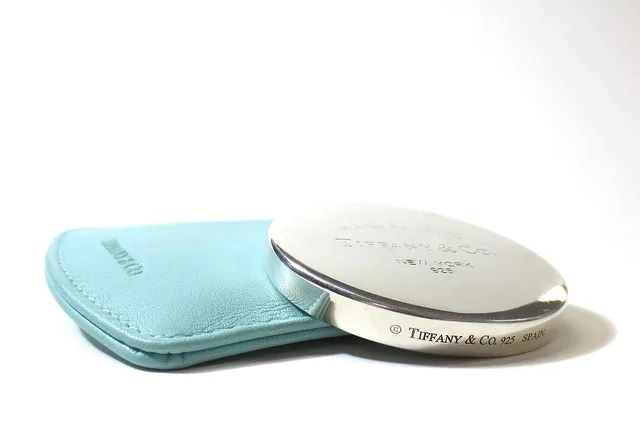
A compliant marking carries an accurate quality mark and, for most domestic makers, a trademark or maker's mark. Adding your mark makes you the responsible party for the claim on that object.
Compliant Marking Checklist
- Quality mark states fineness, such as 925
- Maker's mark or trademark on the piece
- Country of origin statement is accurate
- Advertising matches the stamp on the object
Stock you did not refine yourself needs the same discipline. The method for an unknown silver-colored metal is a useful habit before any stamp goes on it.
How the damage spreads
For a small maker, the practical damage is faster and quieter than a legal case. A single retail partner that pulls stock after an assay test can end a wholesale account.
Repair shops and pawn brokers test incoming silver, and a failed test travels through trade networks quickly. The refund demand is the cheap part of the problem.