Rules
How to Buy Real Sterling Silver Online: US Hallmark and Seller Checks
Buying real sterling silver online in the US means reading the mark and the listing. Here are the checks that separate sterling from plated metal.
What to take away
- A sterling mark is a legal claim, not decoration15 U.S.C. § 294 defines sterling as 925 parts per thousand silver, and the FTC Jewelry Guides at 16 CFR Part 23 govern how quality marks may be used in US commerce.
- The word "silver" alone is not a fineness claim. "Silver plated," "silver tone," "silver filled" and "925" mean four different things, and only one of them is sterling.
- Marketplace badges, "sterling stamped" language and stock photos are not proof. Ask for a close photo of the actual mark on the actual piece, plus weight in grams.
- Your refund rights come from the card network and the platform policy first, then from state consumer law. Chargeback windows commonly run 60 to 120 days from the statement date, so keep the listing page.
- Price per gram is the fastest sanity check. If a 40 gram "sterling" bracelet sells for $18, the metal is not sterling.
What a silver mark actually claims
Sterling is an alloy, not a brand. US law sets the standard at 925 parts silver per 1,000 by weight, which is why the stamp reads "925" or "sterling." The legal definition of sterling silver is short and worth reading once before you spend money online.
A quality mark is a representation about the metal. Under the FTC Jewelry Guides, a seller who stamps or describes an item as sterling is making a claim the item must support. That matters because plating is cheap and stamping is free. A plated piece can carry a maker's name and still contain almost no silver.
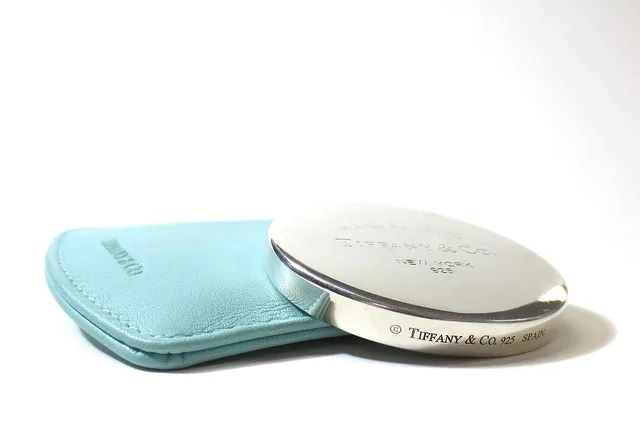
Learn the difference between a maker's mark and a quality mark. The history of silver hallmarks explains assay office marks and how national systems differ. The US never ran a national assay office, so American silver usually carries only a maker's name plus a fineness stamp.
Questions for a seller
Ask these before you pay, and ask them in the listing message thread so the answers are in writing.
- What is the fineness of the metal, and where is the mark located on the piece?
- What is the item's weight in grams, measured on a scale, not estimated?
- Is any part of the piece plated, filled or hollow, including the clasp, pin stem or chain?
- Can you send a photo of the actual mark on the actual item you will ship?
- What is your return window, and who pays return shipping?
A seller who cannot answer the weight question is a seller to skip. Weight is the one number that ties the price to the metal.
A listing that shows a hallmark in one photo and a different item in the next is not a listing error. It is the listing.
Red flags in online listings
Marketplace and handmade listings fail in predictable ways. Watch for these patterns.
| Signal | What it usually means |
|---|---|
| "Sterling silver plated" | Plated base metal, silver content negligible |
| "925 stamp" with no weight | Seller may not have the item in hand |
| Stock photos only, no mark close-up | No verification possible |
| Price far below spot per gram | Not solid sterling |
| "Silver filled" or "silver tone" | A coating or a color, not an alloy |
| No return policy stated | Refund depends on platform escalation |
"Silver filled" is a defined term in the trade: a layer of sterling bonded to a base core, often copper or brass. It is not sterling through the cross section. If you want the full comparison of alloys and coatings, the guide to fine, sterling, Argentium and plate covers how each behaves.
US refund rights and where they come from
Federal law does not give you a general right to return jewelry you simply dislike. What you have is a misrepresentation claim if the item is not as described, plus whatever the platform and your card issuer provide.
Credit card chargebacks are governed by the card network rules and by the Fair Credit Billing Act for billing errors. In practice, most issuers accept a "not as described" dispute within roughly 60 to 120 days of the statement date. File in writing, attach the listing, the messages and photos of what arrived.
State law adds a layer. Some states treat a misdescribed good as a deceptive trade practice, which can support a refund plus costs. A few states have lemon law style statutes, but those cover vehicles, not jewelry. Do not rely on them for a ring.
Record keeping matters if you resell or donate. The IRS guidance on basis of assets explains why you should keep the original invoice with the fineness and weight stated.
Seasonality and availability
Sterling supply moves with the silver spot price, and listing prices follow with a lag of days to weeks. Holiday periods bring more plated costume stock into search results, because volume sellers flood the category. Estate and antique sterling is most plentiful in spring and early summer, when households clear out.
If you are buying to make something, check availability of the specific gauge before you design around it. The article on silver alloys, fineness and testing is the reference to keep open while you compare listings.
Storing what you buy
Sterling tarnishes when it meets sulfur compounds in air. Store pieces in sealed polyethylene bags with an anti-tarnish strip, or a closed box lined with tarnish-inhibiting cloth.
Keep silver out of newspaper, rubber bands and wool: sulfide film etches the surface over months, and the damage is not cosmetic. Polishing it off removes metal and softens the mark you relied on to verify the piece.
Keep the invoice, the listing photos and the weight record together with the item. If you later sell, that paperwork is what supports the fineness claim to the next buyer.