Guides
How Can You Tell Sterling Silver from Silver Plate at a US Thrift Store?
How to tell sterling silver from silver plate: what marks to read, what a magnet and a scratch test show, and where each method fails at a US thrift store.
What to take away
- A stamp reading "sterling," "925," or "925/1000" is the strongest single signal, and 15 U.S.C. § 294 gives that word a legal meaning.
- A magnet tells you almost nothing useful. It sticks to steel and some plated bases, and slides off both sterling and copper-core plate.
- Wear, weight, and edge color beat any kitchen test. Plate wears through at high points; sterling does not.
- Price at Goodwill or Salvation Army is set store by store, so a low tag is not evidence of base metal.
- No home test confirms solid sterling. A jeweler's acid or X-ray reading does, and it costs money.
What is being compared
Four methods show up in thrift aisles. Each answers a different question, and shoppers usually apply the wrong one first.
Four Thrift Silver Tests Compared
Mark reading
- Measures
- Legal claim
- Cost
- Free
- Time
- Seconds
- Best for
- Readable stamps
Magnet
- Measures
- Ferromagnetic content
- Cost
- Free to $5
- Time
- Seconds
- Best for
- Ruling out steel
Visual wear and weight
- Measures
- Plating and density
- Cost
- Free
- Time
- A minute
- Best for
- Unmarked flatware
Acid or X-ray test
- Measures
- Surface alloy
- Cost
- $10 to $40
- Time
- A day or more
- Best for
- Final confirmation
What it actually measures
- Mark reading
- A legal claim struck into the metal
- Magnet
- Ferromagnetic content
- Visual wear and weight
- Plating thickness and base density
- Acid or X-ray test
- Surface alloy composition
Cost
- Mark reading
- Free
- Magnet
- Free to about $5
- Visual wear and weight
- Free
- Acid or X-ray test
- $10 to $40 illustrative
Time
- Mark reading
- Seconds
- Magnet
- Seconds
- Visual wear and weight
- A minute
- Acid or X-ray test
- A day or more
Best for
- Mark reading
- Any piece with a readable stamp
- Magnet
- Ruling out steel cores
- Visual wear and weight
- Trays of unmarked flatware
- Acid or X-ray test
- Final confirmation before a large purchase
A magnet is the tool most shoppers reach for, and the least informative. Steel flatware and some plated blanks pull a magnet. Sterling silver, fine silver, copper, and brass do not. A magnet that does nothing has told you only that the piece is not steel.
Reading thrift store silver marks
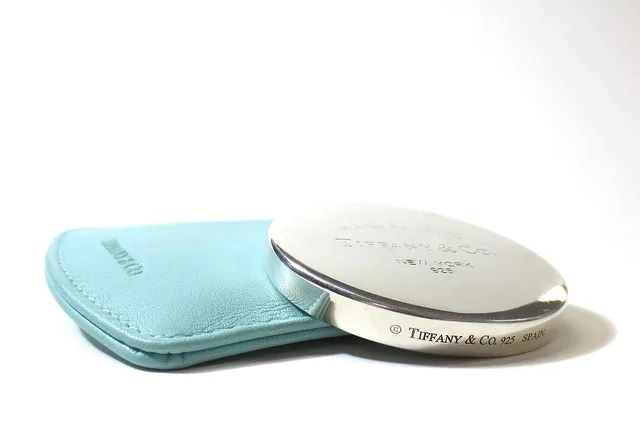
Stamps carry more weight than any physical test, because US law treats them as claims. Under 15 U.S.C. § 294, an article marked "sterling silver" or "sterling" must contain at least 925 parts silver per thousand. The same statute sets the minimum for "coin silver" at 900 parts.
That legal floor is why a struck mark matters. It is also why counterfeit marks exist, and why a mark alone settles nothing on a $4 tray. The silver hallmarks overview explains how maker's marks, assay marks, and quality marks differ, which helps you spot a stamp that is decorative rather than declarative. For the alloy itself, the sterling silver reference covers fineness conventions and why 925 became the standard.
What you will actually see at Goodwill and Salvation Army:
- "Sterling" or "925" struck cleanly on the underside or handle back.
- "Sterling weighted" or "reinforced," which means a sterling shell over a cement or resin core.
- "EPNS," "EP," "Silverplate," or "Community," all plated.
- "IS" or "International Silver," which made both sterling and plate.
- No mark at all, which is the most common case.
That last category is where most thrift purchases land. If the mark is missing or worn flat, the piece needs a different approach, and the method in how to identify and document an unknown silver-colored metal is the right next step before you spend anything.
Option by option
Mark reading wins when the stamp is crisp and the price is low. It fails on worn marks, on weighted pieces, and on anything a previous owner polished hard.
What Each Method Proves
Mark reading
- Wins when
- Crisp stamp, low price
- Fails on
- Worn marks, weighted pieces
- Proves
- Legal claim
Magnet
- Wins when
- Rejecting steel
- Fails on
- Copper-core plate
- Proves
- Not steel
Visual wear and weight
- Wins when
- Unmarked flatware
- Fails on
- Thick plating
- Proves
- Density and wear
Acid or X-ray
- Wins when
- Defensible answer needed
- Fails on
- Cost and time
- Proves
- Surface alloy
The magnet test is right for one job: rejecting steel. It is wrong for everything else. Copper-core plate and sterling behave identically under a magnet, so a slide-off result proves nothing about silver content.
Visual wear and weight is the practical method for unmarked flatware. Sterling is denser than the nickel-silver and brass bases used in plate, so two spoons of the same size feel different in the hand. Plate also wears at the bowl rim, the tine tips, and the high points of any pattern, exposing a base color that is yellow, gray, or pink rather than white.
Acid and X-ray testing is the only method that produces a defensible answer. A jeweler scratches a hidden spot, applies acid, and reads the color, or runs an X-ray fluorescence reading. Both cost money and both take time, which is why they suit a $200 tea set and not a $3 spoon.
Where each one wins
- Marked and cheapbuy it, the stamp carries the legal claim.
- Unmarked flatware, heavy and coldtest a hidden spot before a large purchase.
- Unmarked holloware with visible edge wear in a second colortreat as plate.
- Anything magneticsteel or plated steel, leave it.
- Anything priced above $50 with no markget it tested before you pay.
What none of them solve
Every method here reads the surface. Weighted sterling has a sterling skin over a non-silver core, so a surface reading returns sterling on a piece that is mostly filler. Plated holloware with thick plating can read close to sterling at the surface too.
None of these tests tells you what the piece is worth. Resale value depends on maker, pattern, condition, and demand, and a thrift tag reflects none of that. The silversmithing techniques overview is useful context for judging how a piece was made, but it will not price it. If you are buying to resell, the silver alloys guide explains how fineness, composition, and marks interact, which is the part that survives a bad guess about pattern popularity.
A thrift store price is not an appraisal. It is a number a manager chose that morning.