Rules
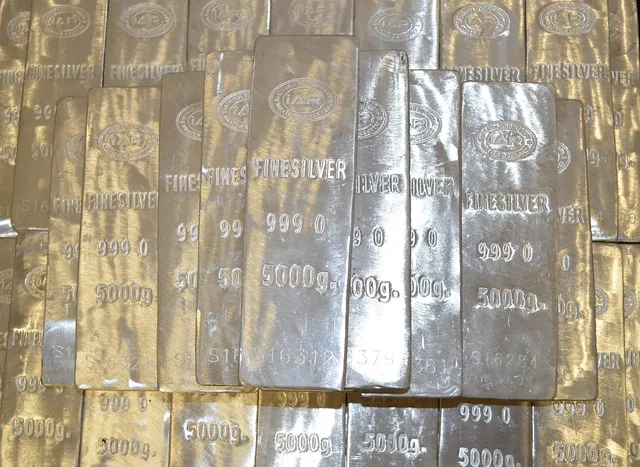
Part of Silver fineness marks: what 999, 958, 925 and 800 claim
Silver Firestain Porosity Problems: Safe Triage
Silver firestain porosity problems: learn to distinguish surface change, casting voids, contamination, mixed alloys, and misleading marks before repair.
What to take away
- Describe the defect before choosing a remedylocation, depth, pattern, process stage, and affected batch matter.
- Firestain is not the same as removable surface scale, and more polishing can thin the piece without reaching the cause.
- Porosity has several possible origins; one pit does not prove gas, shrinkage, dirty metal, or poor casting practice.
- Unknown, plated, soldered, and contaminated metal stays out of known clean scrap.
- A mark is evidence to examine, not permission to heat, sell, or refine the entire object as that alloy.
For silver firestain porosity problems, failure analysis begins with preservation. Stop the process, isolate the piece and related stock, photograph the defect, and retain offcuts, sprues, process notes, and supplier records. Changing five variables at once destroys the evidence needed to find the cause.
Triage table
| Observation | Possible causes to separate | First safe action |
|---|---|---|
| Gray or purple area after heating and finishing | Surface oxide, subsurface copper-rich oxidation, residue, mixed alloy | Stop polishing and compare under consistent light |
| Pinholes after abrasive finishing | Casting pore, inclusion, pulled solder, plating break, deep scratch | Map size, shape, location, and process stage |
| Hard line or color boundary | Solder, clad layer, plate, repair, mixed component | Inspect construction before heat or chemicals |
| Unusual cracking | Work hardening, overheating, contaminated metal, poor joint, wrong stock | Quarantine stock and review process history |
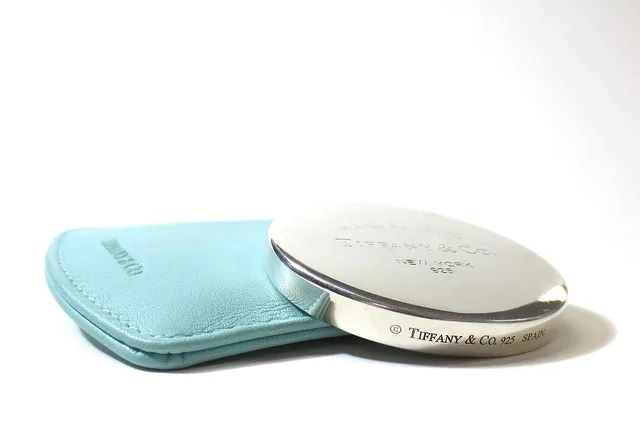
| 925 stamp with exposed base color | Plate, repair, separate finding, false or misplaced mark | Document every component and obtain qualified testing |
Firestain and surface oxide
On copper-bearing silver alloys, heating in air can produce oxidation at and below the surface. A superficial oxide film and deeper firestain require different responses. Pickling may remove accessible surface oxides while leaving a copper-rich affected zone visible after finishing.
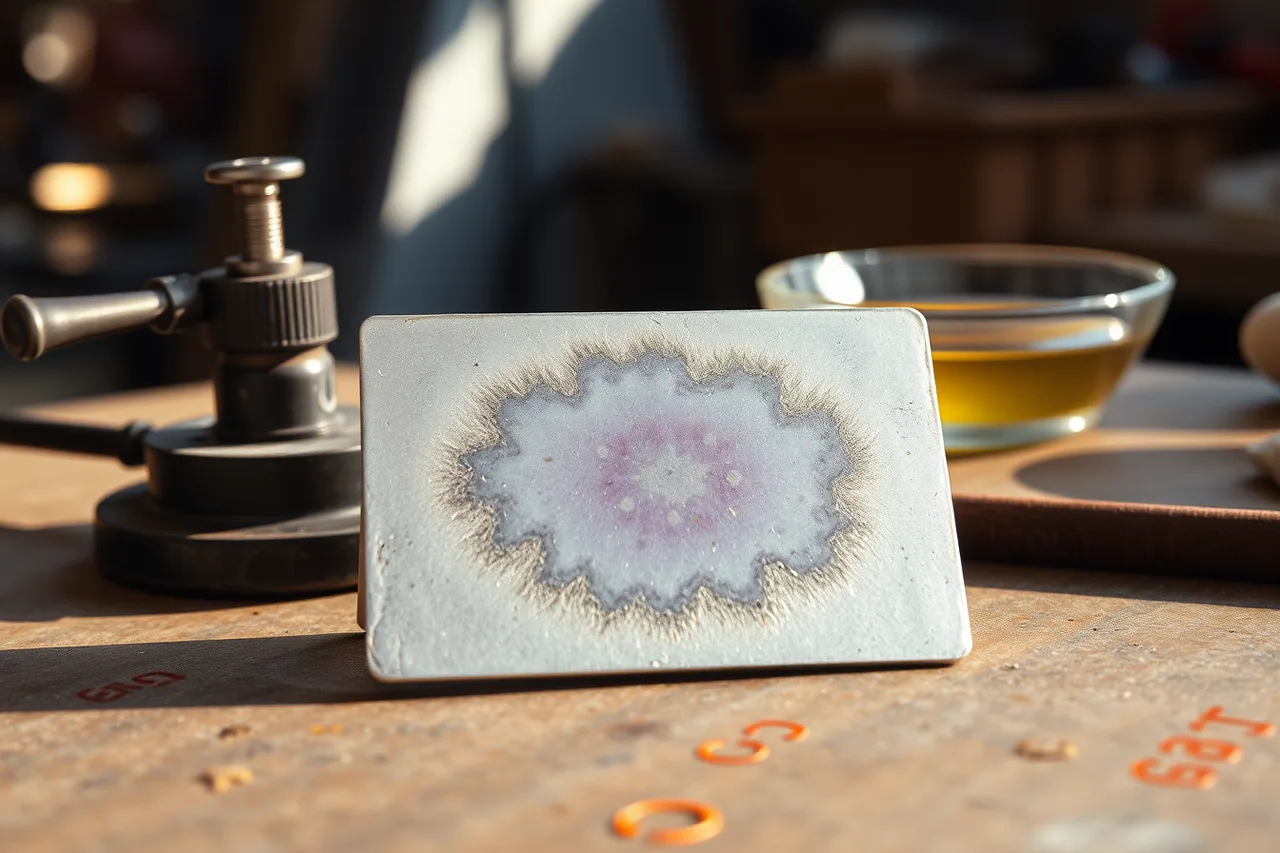
Do not keep sanding until the color disappears without measuring thickness and protecting detail. The affected depth, final dimensions, edge sharpness, hallmark, and intended finish all limit material removal. If depth must be established, cross-section metallography can expose the affected layer, but it is destructive and requires authorization. On a historic or customer-owned piece, consult a conservator or experienced repair specialist before changing the surface.
Smithsonian conservation research on silver-alloy deterioration discusses how alloy composition and environment influence corrosion and surface change. It supports cautious material analysis, not a universal diagnosis from color alone.
For a repeat shop problem, compare labeled coupons from the same batch. Record torch atmosphere, time at temperature, flux coverage, annealing count, pickle condition, abrasive sequence, and lighting. Test a named firestain barrier such as Prips flux on coupons; depletion gilding can enrich the surface but does not establish or remove subsurface damage. Change one controlled variable at a time.
Porosity
Classify visible voids before naming a cause:
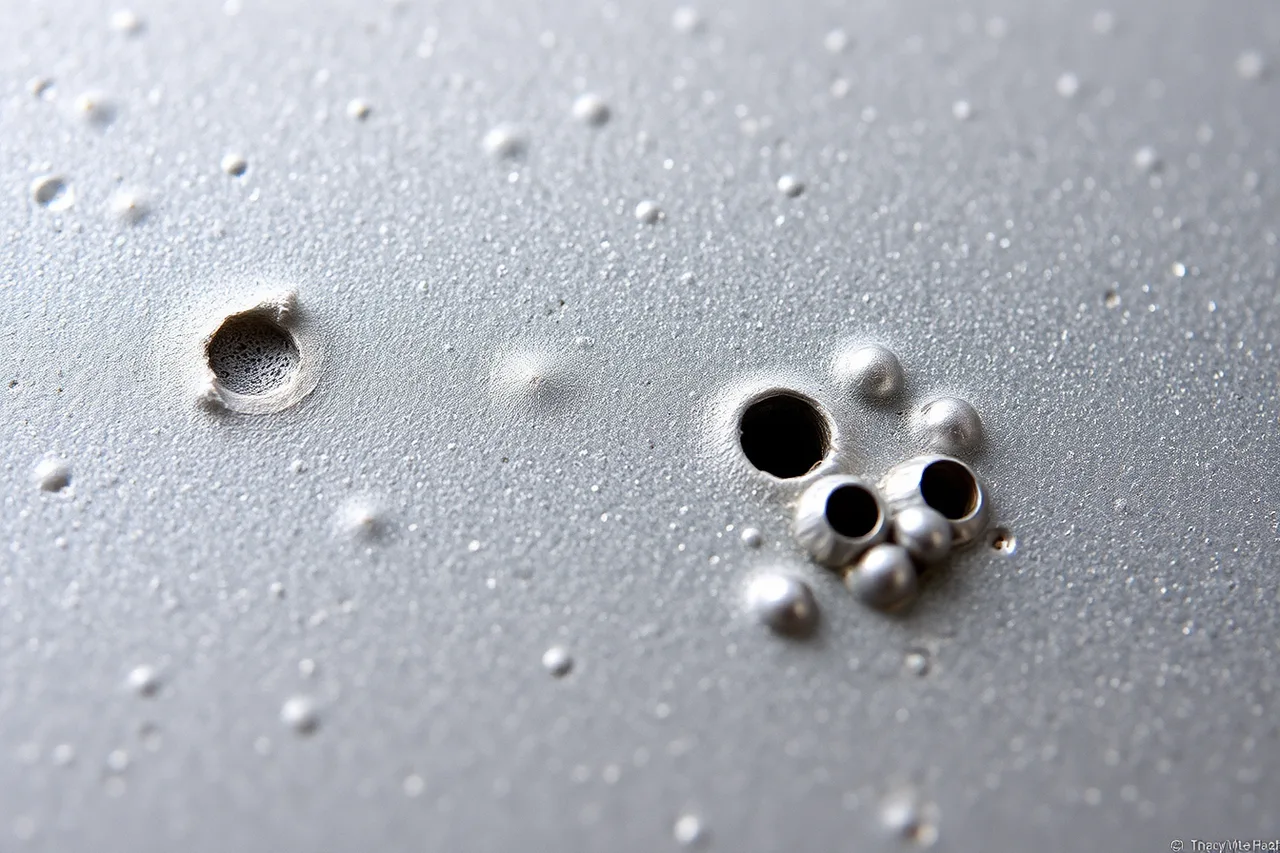
- rounded or elongated;
- isolated or clustered;
- near a heavy-to-thin transition or throughout;
- open before polishing or revealed afterward;
- associated with an inclusion, repair, or solder;
- present in one casting or across a batch.
Gas, shrinkage, incomplete feeding, investment breakdown, turbulence, contaminated charge, and finishing pullout can produce different patterns. A casting professional can review the melt, flask, sprue, burnout, pouring, cooling, and finishing record; magnification, dye-penetrant testing, radiography, or sectioning can map surface and internal voids, while specific gravity is only a bulk screen and may mislead on mixed construction. These inspections map defects but do not independently prove the cause; filling a visible pit may hide symptoms while leaving weak or porous material below it.
Contamination
Contamination can enter through mixed scrap, steel tools, abrasive carryover, dirty crucibles, solder, plating, lead-bearing repairs, cadmium-bearing legacy material, or unknown customer objects. Treat the health and process questions separately.
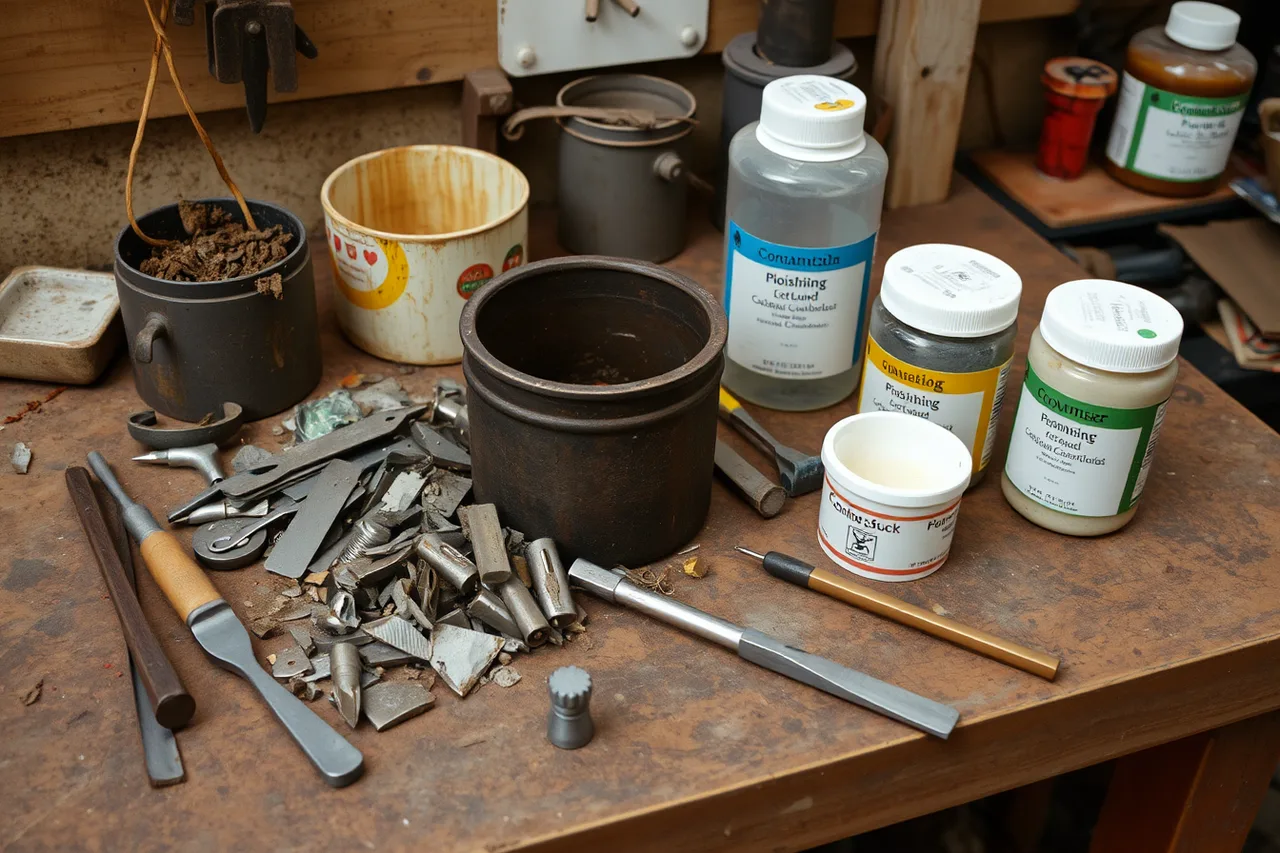
Do not melt or grind unknown metal to see how it behaves. Heating and dust generation can create exposures that visual inspection cannot predict. Review product safety data, use task-specific ventilation and controls, and obtain professional identification where the intended work could release hazardous material. In a U.S. workplace, OSHA's Lead and Cadmium standards may apply to occupational exposure; follow applicable controls rather than relying on visual inspection.
For known stock, dedicate or thoroughly clean crucibles, files, brushes, buffs, and storage. Label polishing compounds and do not move one wheel between incompatible metals or finishes without a documented cleaning plan.
Mixed alloys and coatings
An object may combine sterling sheet, fine-silver bezel, lower-temperature solder, plated chain, base-metal spring, and old repair material. A reading from one accessible spot cannot automatically describe the rest. For fineness terminology, ISO 9202, Jewellery—Fineness of precious metal alloys, is a named international standard; it does not verify an individual object's composition.
GIA's case note on gold-plated gold and XRF shows a broader analytical limitation: a surface coating can affect XRF interpretation even when the substrate is itself precious metal. That example concerns gold, so it does not establish the composition of a silver object. It does show why coating, test location, and method must be reported.
Map each component, joint, worn edge, and reading location. If the piece cannot be represented by one material statement, describe the construction by component.
Misleading or misunderstood marks
A lone 925, a maker-style logo, an assay-office symbol, and a complete official hallmark are not interchangeable. Marks may also be worn, copied, added later, placed on one component, or read upside down. For U.S. fineness claims, consult the Federal Trade Commission Jewelry Guides and the National Gold and Silver Stamping Act; neither is a public assay-office register that authenticates each individual stamp. For a claimed British hallmark, consult the reference of the claimed assay office, such as the Birmingham Assay Office.
Use a four-part record:
- Exact transcription and scaled photograph.
- Source used to interpret the mark.
- Component bearing the mark.
- Independent composition evidence, if obtained.
Never erase the distinction between "bears a 925 stamp" and "verified as 925 silver by the stated method."
Corrective-action record
For every recurring problem, capture the affected batch, operator, equipment, consumables, process settings, defect map, proposed cause, trial, result, and disposition. The disposition may be rework, downgrade, professional repair, refining as uncertain material, or rejection.
Common questions
Can pickle remove firestain?
Pickle can remove some surface oxides. A deeper affected zone may remain, so diagnose before promising removal.
Does a pinhole prove contaminated silver?
No. Pits and voids have several possible causes and need process evidence.
Can plated scrap enter a sterling melt?
Keep it separate unless a qualified refining plan accepts and accounts for its full construction.
Is a 925 stamp enough for a repair estimate?
No. Inspect components, coatings, prior solder, stones, fills, and test limits before setting scope.