Maintenance
Part of Silver fineness marks: what 999, 958, 925 and 800 claim
Silver stock record checklist for traceability
Use this silver stock record checklist to track supplier details, material marks, batch codes, process notes, and release checks from intake to finished piece.
What to take away
- Write down supplier, product name, claimed fineness, form, dimensions, temper, lot number and invoice before the parcel is opened.
- Keep the maker's stamp, fineness mark, assay office mark and your own test result in separate fields; they prove different things.
- Give solder, findings and chain their own batch codes, then link them to the job rather than the parent sheet.
- Move any offcut that loses its label into unknown stock and leave it there until evidence restores its identity.
- Photograph the unopened label and the marks, and transcribe what you see instead of translating it into a stronger claim.
A silver stock record checklist answers two questions: What did the supplier say this metal is, and can the shop show that the same metal reached this object? It covers sheet, wire, tube, and casting grain. It also covers findings, chain, solder, and customer repairs.
Intake identity
Record this before the packaging comes off:

- intake date and staff initials;
- supplier's legal or trading name;
- invoice or order number;
- exact product name and catalog code;
- claimed metal and millesimal fineness;
- form, dimensions, quantity and mass;
- temper or hardness designation, if supplied;
- batch, lot, heat or melt number;
- country of supply and intended sales jurisdiction;
- technical sheet and safety data sheet revision.
File the invoice and a photograph of the label with the record. A handwritten bin label routes material around the bench, but it does not replace the purchasing trail.
Mark classification
Transcribe every mark exactly as it appears. Classify it only after checking the system it belongs to.
| Field | What to record | What not to assume |
|---|---|---|
| Visible text | 925 | Official assay, maker, date or country |
| Symbol | Shape and orientation | Meaning from a similar-looking image online |
| Sponsor or maker | Exact initials and shield | Current ownership or authorship of the whole object |
| Assay office | Identified office symbol | Bulk composition of untested additions |
| Date mark | Character and shield | Manufacture date without system and cycle |
| Inventory code | Supplier or shop code | Precious-metal fineness |
Birmingham Assay Office's hallmark explanation separates compulsory hallmark elements from optional marks and sets out the roles of sponsor, fineness and assay office marks in the UK system. Check the rules for the jurisdiction you are selling into rather than treating that system as worldwide.
Physical stock record
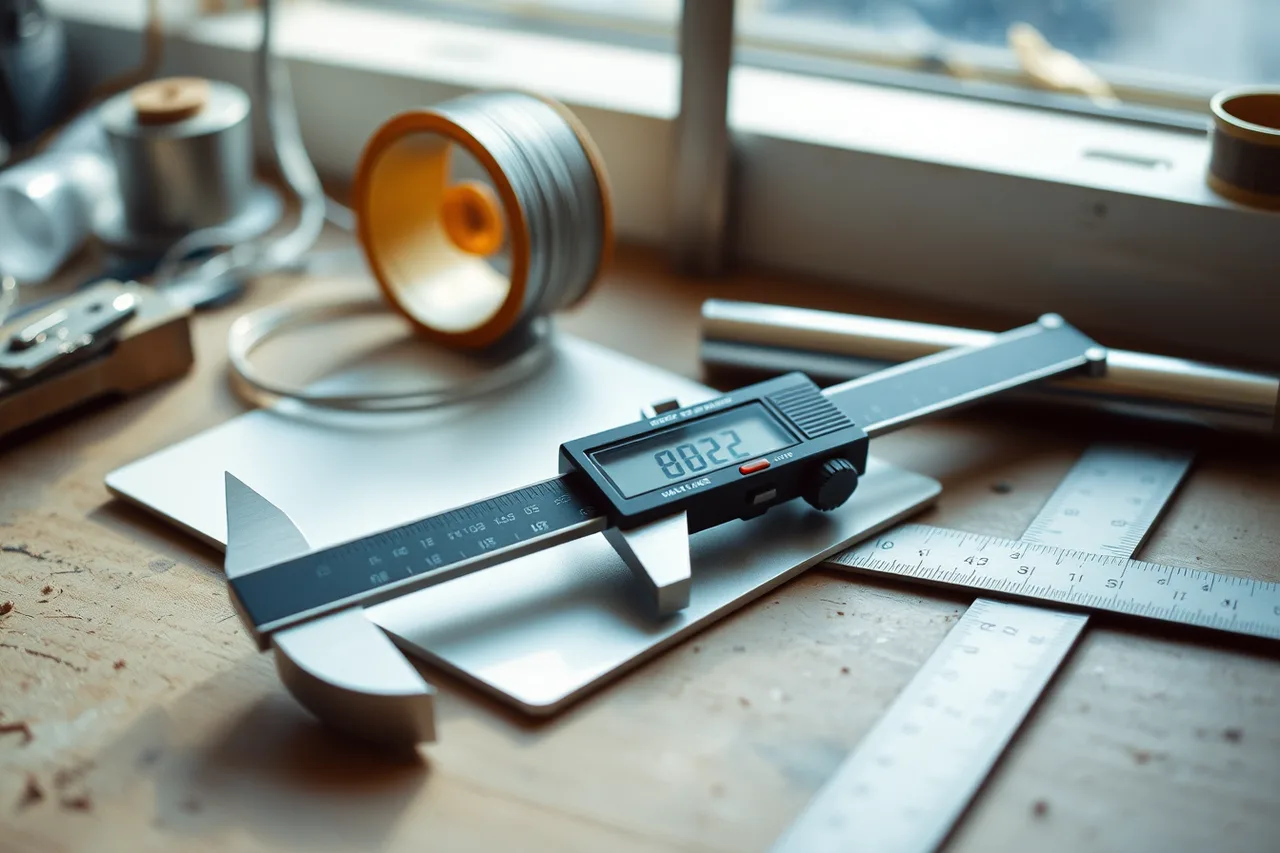
Measure with calibrated tools and state the unit every time:
- sheet length, width and thickness;
- wire diameter or profile dimensions;
- tube outside diameter, wall and length;
- chain style, gauge, length and clasp;
- casting-grain package mass;
- finding size and supplier part number;
- solder form, grade and batch.
Photograph the unopened label, the material, the marks and a scale in the same frame. Note damage, oxidation, contamination or mixed packaging at intake, while the supplier can still be asked about it.
Process controls
A bench impression is not a composition claim. Keep it in its own field.
Give each of these its own entry:
- Sawing, forming and work-hardening observations.
- Annealing cycle, with the operator named.
- Solder and flux combination.
- Casting parameters and result.
- Pickle, patina, abrasive and polishing response.
- Test coupon identity and location.
- Instrumental or assay report, with operator and uncertainty.
When a supplier revises a technical sheet, keep the revision that was in force for the batch. New guidance should not overwrite the record of an earlier process.
Fineness wording check
A description can mislead even when a number appears somewhere in the record. The British Hallmarking Council's fineness-description guidance covers wording around precious-metal fineness in the UK context. Before the piece is published or sold, check the law and guidance that apply to the actual product, market, weight and date.
Route any product description containing one of these through a second reader:
- sterling, fine silver, Britannia or a proprietary alloy;
- plated, coated, filled, bonded or clad construction;
- nickel-free, lead-free, hypoallergenic or food-safe claims;
- handmade, hand-wrought, antique or restored claims;
- a fineness or hallmark statement.
Shop-floor traceability
Assign a short batch code that follows the metal through the job traveler. Label partial sheets, coils, loose findings, test coupons and work trays. Store clean known offcuts apart from soldered material, floor sweeps, plated stock, unknown scrap and chemically contaminated waste.
For every finished piece, record:
- design or job number;
- stock batch codes and approximate quantities;
- solder, findings, stones, coatings and finishes;
- hallmarking or testing records;
- deviations, repairs and substituted components;
- final mass, dimensions, photographs and product wording.
Release gate
Do not release the item until a second person, or a documented self-check in a one-person shop, confirms the following. Stock identity runs unbroken from invoice to piece. Marks are transcribed, not embellished. Mixed-metal and plated parts are disclosed.
Tests are described by method and location. The product description matches the market it will be sold in. Care and repair notes fit the actual construction.
Uncertain statements have been removed or narrowed.
Common questions
Is a supplier invoice enough to identify a finished piece?
Only if the shop can trace that invoiced stock through storage, fabrication, substitutions and final assembly. The invoice proves what was bought, not what is in the piece.
Should solder share the main alloy batch code?
No. Solder carries its own product and batch record, then gets associated with the job. Sharing a code lets a lower-fineness addition inherit the parent sheet's claim.
What happens when offcuts lose their labels?
Move them to unknown stock. Do not return them to a known-alloy bin from memory, and do not let a customer piece absorb them.
Must every mark be decoded?
No. Preserve an accurate transcription and state plainly what remains unidentified. Guessing at a date mark or assay office symbol creates a claim the shop cannot support.