Rules
Part of Silversmithing Studio Safety: Hazards and Controls
How to investigate silversmithing exposure problems
Silversmithing exposure problems: identify solder, flux, pickle, investment, and plating hazards; plan sampling, preserve evidence, and check OSHA rules.
What to take away
- Stop and preserve evidence when residue moves beyond capture, a control fails, or a worker reports symptoms.
- Identify the exact alloy, compound, flux, acid, process, exposure route, duration, and affected person.
- Odor, visible dust, and comfort cannot prove an exposure is acceptable.
- Cleaning can create a second exposure if it redistributes dust or mixes incompatible wastes.
- Noise and musculoskeletal risk need measurement and task redesign, not only earplugs or stretching.
Silversmithing exposure problems are rarely solved by adding a generic mask or telling the maker to work more carefully. Diagnose where the contaminant or physical load begins, how it travels, when controls fail, and which evidence will show that the correction works.
Rules, sampling, and escalation
For covered workplaces, check applicable OSHA permissible exposure limits (PELs) in 29 CFR 1910.1000 Table Z-1 and any substance-specific standard. Relevant examples include the Cadmium standard (29 CFR 1910.1027), Lead standard (29 CFR 1910.1025), and Respirable Crystalline Silica standard (29 CFR 1910.1053). OSHA’s Hazard Communication standard (29 CFR 1910.1200) requires safety data sheets (SDSs) for hazardous chemicals to be accessible to workers; its Ventilation standard (29 CFR 1910.94) applies to specified operations. State-plan rules may differ or be more protective.
For a defensible exposure assessment, have a qualified industrial hygienist match the sampling plan to the material, process, and question. Select personal breathing-zone and task-based or full-shift sampling as appropriate, then choose the pump, filter, cyclone, or other collection media specified by a current method for that contaminant and particle size. NIOSH’s Manual of Analytical Methods (NMAM) Method 7300 is one established option for elemental analysis of metal aerosols when its scope fits the sample; an OSHA method may also apply.
Document the worker and task, sampling times, controls in use, and pump calibration before and after sampling. Include appropriate blanks, seal and label samples, maintain chain-of-custody records, and send them to a laboratory qualified for the method and analyte. Compare results with the applicable OSHA limit using its averaging period and sampling requirements; NIOSH recommended exposure limits (RELs) are recommendations, not OSHA legal limits. Air sampling alone does not assess skin exposure.
For assistance, contact the OSHA area office or the applicable state-plan agency. The NIOSH Health Hazard Evaluation (HHE) Program can evaluate workplace hazards on request; NIOSH recommendations do not replace OSHA enforcement.
First response
Stop the affected task. Keep people out of the area when a release, spill, unknown material, failed extraction system, damaged fuel component, or uncontrolled energy source is present. Follow the studio emergency plan. Seek urgent medical help for serious symptoms or exposure as directed by emergency professionals and the product information.
Do not taste, touch, sniff closely, or improvise a chemical test. Preserve labels, lot information, safety data, work records, photographs, control readings, time, task duration, and names of affected people. Avoid cleanup that destroys evidence or spreads contamination.
Metal dust and polishing debris
Map residue by location and particle path. Dust upstream of a hood may indicate poor capture distance or direction. Debris behind a wheel may reflect the normal throw path but still show failed enclosure or housekeeping. Residue outside a closed collector can indicate a seal, filter, bag, duct, or service problem.
Check:
- metal and coating composition, including solder and prior repairs;
- abrasive and polishing-compound ingredients;
- wheel, speed, contact orientation, production rate, and work size;
- hood position, airflow indicator, make-up air, and cross-drafts;
- cleaning method, work clothing, food controls, and take-home route;
- exposure measurements for the relevant worker and task.
Some silver solders contain cadmium, lead, or both. Heating cadmium-bearing silver solder can generate highly toxic cadmium fume, so verify the alloy and repair history rather than assuming the work is cadmium-free; apply the OSHA Cadmium standard (29 CFR 1910.1027) when it covers the exposure. Lead in solder may bring the OSHA Lead standard (29 CFR 1910.1025) into scope.
Do not dry sweep or blow fine contamination with compressed air. Use a method approved for the identified material and recovery system. Isolate recovered precious-metal waste from incompatible chemicals and combustible accumulations.
Flux emissions and heated surfaces
Determine the exact flux, solder, base alloy, coating, contamination, and maximum temperature. Heating an unknown plated or repaired object can produce a different hazard from heating clean sterling stock. Compare the actual process with the supplier's instructions and safety data.
Observe plume direction without placing a face in it. Verify that source capture remains effective at the soldering position, including larger work that changes hood distance. Check whether the flame or hot work can ignite deposits inside or near the system. A fan that pulls a flame or directs emissions across the face is not a valid correction.
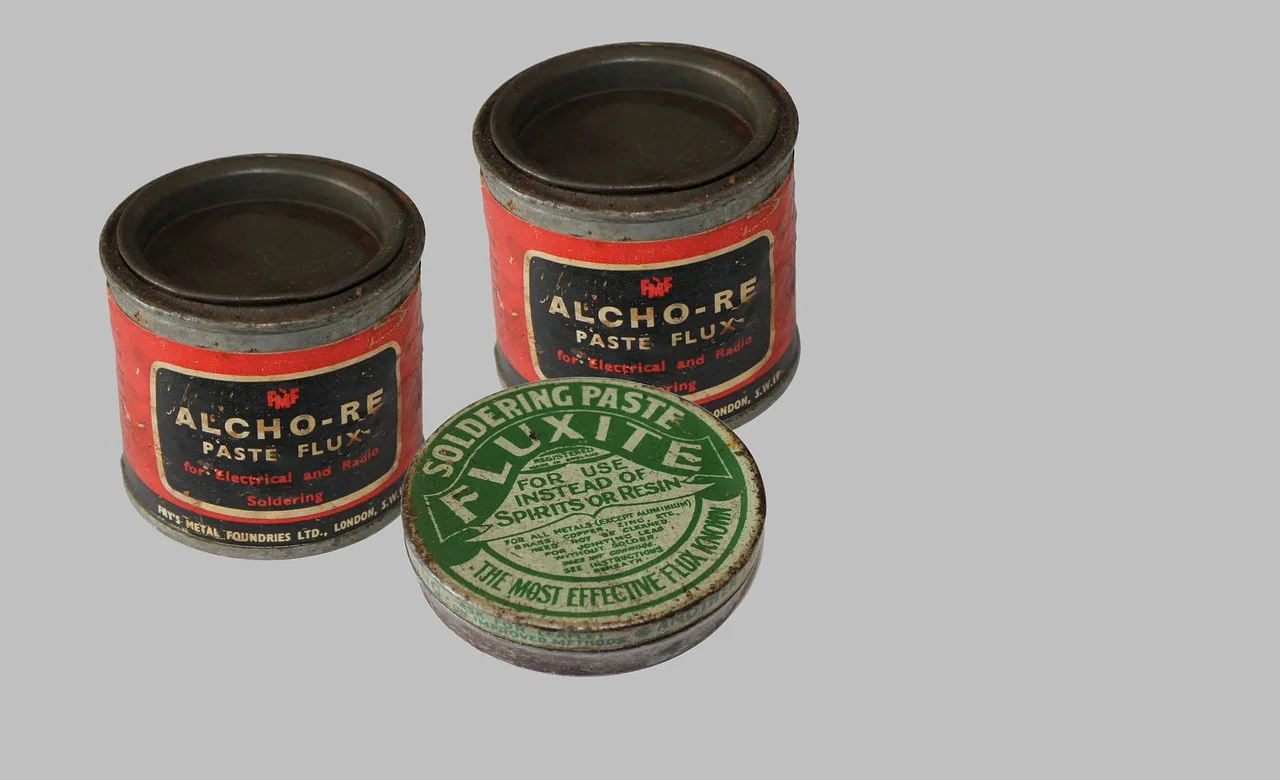
Flux formulations vary. Some silver-soldering and brazing fluxes contain borates, including borax, or fluoride compounds; identify the ingredients from the label and SDS rather than treating all flux as the same. Repeated occupational exposure to fluoride compounds can cause skeletal fluorosis, so assess airborne emissions and capture them at the source.
Acid and pickle handling
For a splash, exposure, spill, unexpected reaction, or damaged container, use the product-specific emergency procedure and get qualified assistance. Do not neutralize an unknown material or add another chemical by instinct. Reaction heat, gas, and splatter can worsen the event.
After immediate control, inspect labels, concentration, temperature, container compatibility, secondary containment, transfer tools, lid, ventilation, emergency washing access, and waste segregation. Check whether metal, steel tools, incompatible residues, or an incorrect addition entered the bath.
Investment and mould dust
Investment powders and mould work can release respirable crystalline silica when the material contains silica such as quartz or cristobalite. Check the product SDS and process, including mixing, breaking out, and cleanup; apply the OSHA Respirable Crystalline Silica standard (29 CFR 1910.1053) when it covers the work. Select a silica sampling method and respirable-size sampler suited to the task.
Plating and finishing compounds
Some silver plating and finishing baths use silver nitrate or silver cyanide; identify the actual formulation from its label and SDS. Treat cyanide-containing solutions and waste as a distinct hazard: acidification can release hydrogen cyanide gas, so never add acid to a cyanide bath or waste. Preserve the product information and bath records as evidence, and get qualified help with assessment and controls.
Noise
Noise risk depends on sound level, duration, frequency, task pattern, and combined daily exposure. A phone reading or the need to raise one's voice can flag a problem, but formal decisions may require calibrated instruments and a qualified assessment.
NIOSH states that repeated occupational exposures at or above 85 dBA are hazardous under its recommended limit and advises measuring both area levels and the sound reaching a worker. Its guide to understanding workplace noise exposure also describes noise mapping and specifies settings for NIOSH-oriented measurements. Apply the relevant OSHA, state-plan, and local requirements separately.
For general-industry noise requirements, also check OSHA’s Occupational Noise Exposure standard (29 CFR 1910.95), along with any applicable state-plan rules. NIOSH’s 85 dBA recommendation is not the OSHA legal limit; assess results under the applicable OSHA standard.
Start with quieter equipment, maintenance, damping, isolation, barriers, distance, speed reduction, and schedule changes. Hearing protection addresses remaining exposure and needs correct selection, fit, care, and program management.
Separate the noisiest process from concentration-heavy bench work where practicable. Mark any zone that depends on restricted access, and check whether reflective walls or multiple machines change exposure. Record the exact equipment state during measurement, including speed, load, extraction, doors, and neighboring work. Repeat the assessment after maintenance or layout changes instead of treating an old reading as permanent.
Repetitive strain and static posture
Pinching a small piece, holding shoulders raised, bending the neck toward magnification, and repeating a forceful file stroke can create a combined load. Record force, repetition, duration, recovery time, contact stress, vibration, posture, reach, vision demand, and worker report.
NIOSH defines occupational ergonomics as designing work tasks and demands to suit worker capabilities, with the goal of reducing work-related musculoskeletal disorders. Its ergonomics overview identifies physical and other contributing factors rather than assigning one universal bench posture. Use a qualified ergonomic assessment for persistent symptoms or complex work.
Redesign before relying on reminders. Raise or support the work, improve magnification, reduce pinch force, change handle size, use a holder, rotate genuinely different tasks, reduce batch length, and provide recovery. A break does not correct a tool or workstation that immediately recreates the same load.
Evidence-to-action table
| Finding | Do not assume | Next evidence |
|---|---|---|
| Dark bench dust | It is only silver | Material and compound identification, particle and exposure assessment |
| Odor during soldering | Odor proves safe or unsafe concentration | Process inventory, capture test, exposure evaluation |
| Splash marks near pickle | The lid alone will fix handling | Workflow observation, container and transfer review |
| Ringing ears after polishing | Short duration means low dose | Task and personal noise measurement |
| Thumb pain during setting | Technique alone caused it | Force, repetition, posture, tool, support, and recovery assessment |
Common questions
Can visible dust tell me the inhalation risk?
No. Particle size, composition, airborne concentration, duration, and breathing-zone exposure require appropriate assessment.
Does no odor mean no harmful vapor or fume?
No. Odor thresholds differ from exposure limits, and some hazards have weak or unreliable warning properties.
Should a worker continue while waiting for measurements?
Not when the task is uncontrolled or outside the approved assessment. Apply an effective interim control or place the work on hold.
Can task rotation solve repetitive strain?
Only if it reduces the same tissue load and the remaining risk is acceptable. Rotating between similar pinch-force tasks may offer little recovery.