Maintenance
Part of Silver finishing guide: abrasives, polishing, burnishing, patina, and cleaning
Silver finishing safety checklist: bench process gates
Silver finishing safety checklist for job limits, machine setup, extraction, work holding, cross-contamination, cleaning, dimensions, and release.
What to take away
- Do not start until the target finish and material-removal limits are documented.
- Match every wheel, abrasive, compound, speed, guard, and extraction setup to the machine and task.
- Label and segregate media to prevent coarse-particle and metal cross-contamination.
- Inspect dimensions and protected detail between stages, not only at final polish.
- Release requires a clean surface, safe edges, retained structure, and complete process record.
Use this silver finishing safety checklist for manual or powered silver finishing. Mark pass, fail, hold, or not applicable. Machine instructions, exposure assessment, and shop procedures control over this general list.
Job and material gate
- Alloy, plating, patina, coating, stones, joins, enamel, adhesive, and mixed materials are identified.
- Starting dimensions, edges, marks, detail, and surface defects are recorded.
- Target gloss, texture, direction, color, and transition are sampled.
- Minimum thickness, width, edge radius, detail, and flatness are stated.
- Protected zones and prohibited cleaning methods are marked.
- Historic or uncertain objects are referred to a qualified conservator.
Abrasive and compound gate
- Product, grade, backing, binder, lubricant, and intended material are identified.
- Safety data and exposure controls are available.
- Media is clean, sound, and within its service limit.
- Each grade and compound has a dedicated labeled tool and container.
- The starting grade was proven on matching stock.
- Disposal and precious-metal recovery routes are assigned.
Machine and wheel gate
- Machine ID and manufacturer instructions match the planned operation.
- Spindle, arbor, flange, nut, tool rest, hood, and guard pass inspection.
- Wheel type, size, rating, condition, and direction are correct.
- Speed is within the wheel and machine limits.
- Emergency stop and power isolation are accessible.
- Hair, clothing, jewelry, cords, and loose materials cannot be caught.
OSHA's abrasive-wheel rule requires guarding for covered machinery and sets specific guard and exposure-angle requirements. It includes exceptions and does not cover every cloth, paper, or small mounted jewelry tool, so the exact machine and applicable rule must be identified.
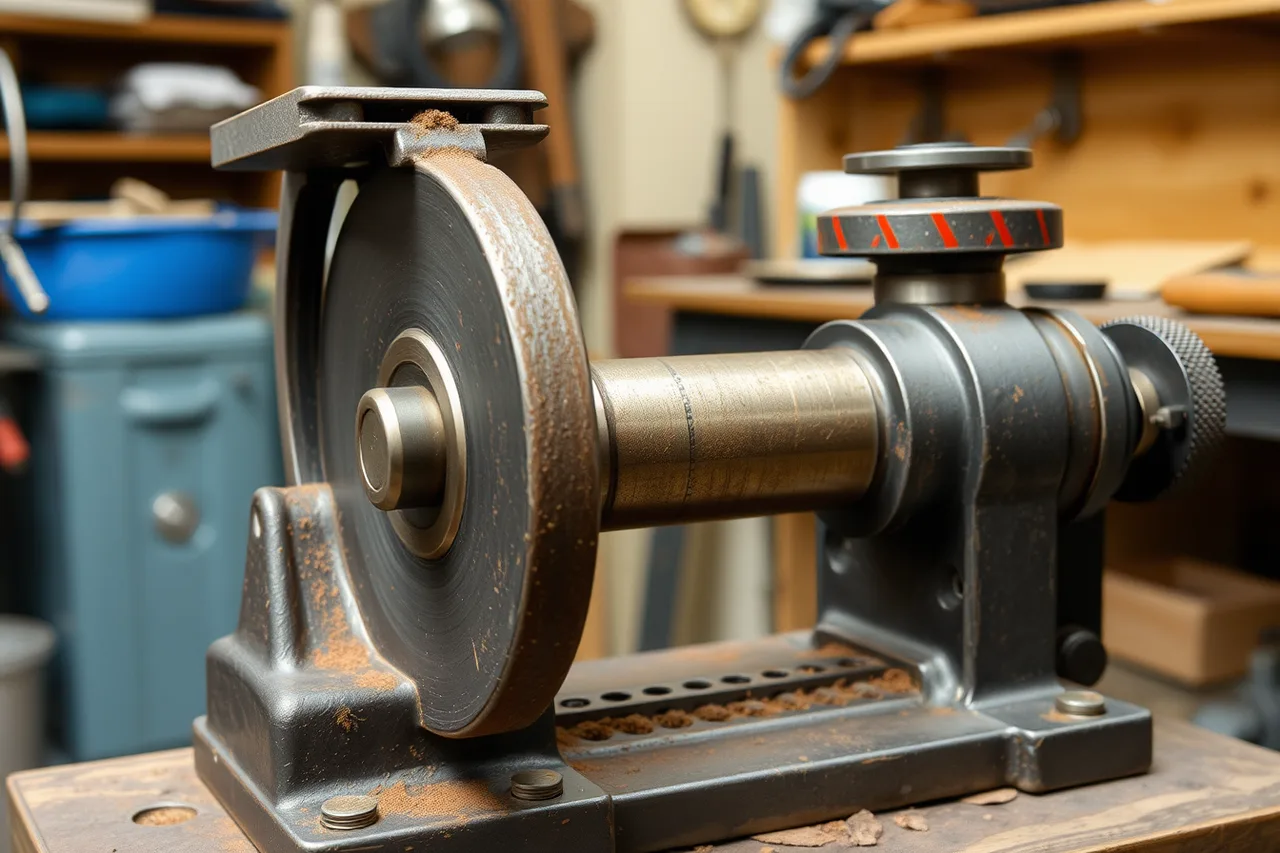
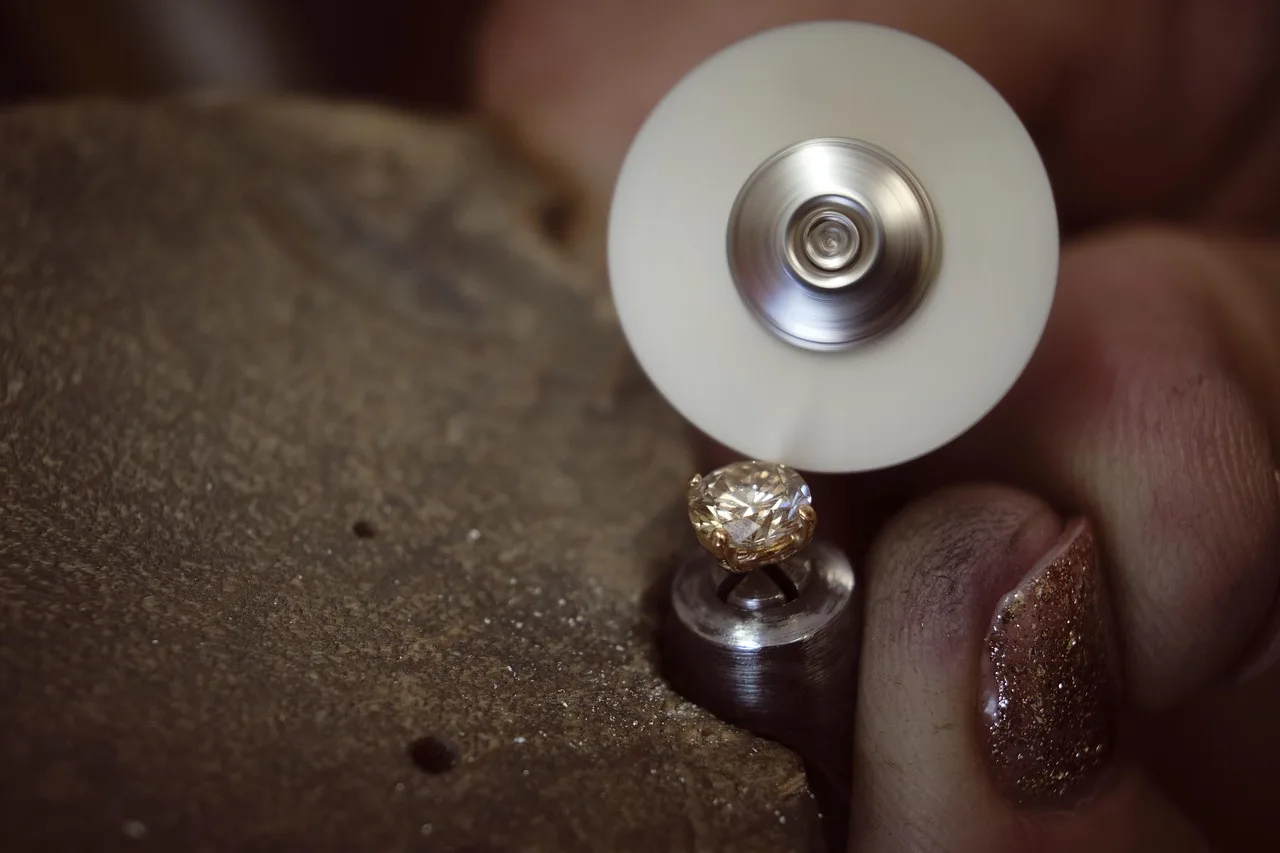
Before approving an unfamiliar setup, document the machine category, attachment, rated speed, and workpiece size. Record the contact point and direction of rotation, then compare with the manufacturer's instructions and shop risk assessment.
A guard that fits one wheel geometry may interfere with another, and an improvised opening may expose the operator to fragments or a caught workpiece. Put the equipment on hold until a competent person resolves the discrepancy.
Extraction and work zone
- Hood is located to capture the generated stream at its source.
- Extraction is operating and verified before the wheel starts.
- Duct and collector are compatible with metal, compound, sparks, and combustible lint.
- The work does not block airflow or direct debris toward the breathing zone.
- Required eye, face, hearing, respiratory, and body protection is in place.
- Bench and floor are clear of recovered work and trip hazards.
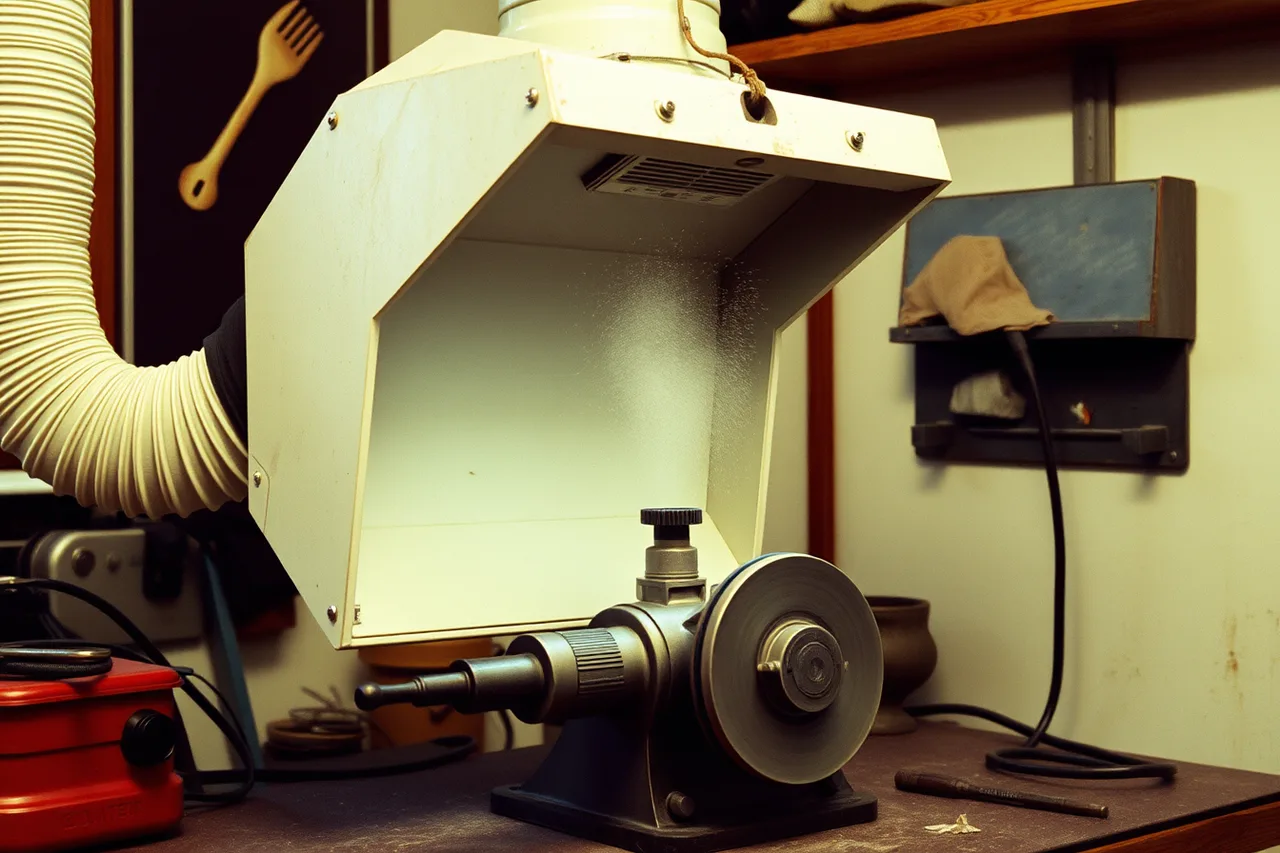
NIOSH's guidance for grinding, polishing, and buffing prescribes local exhaust for airborne contaminants from metal finishing. Its engineering document supports source capture, but it does not supply the final airflow design for a particular jewelry bench.
Work holding and contact
- Holder supports the piece without crushing, scratching, or loading a stone.
- Contact direction will move a caught piece away from the operator where feasible.
- Thin edges, chains, loops, prongs, and protrusions have a validated plan.
- Hands remain outside pinch, wheel, and ejection zones.
- Trial contact confirms stability before production work.
- Heat-sensitive materials have a temperature and stop control.
Between-stage control
- Surface shows only the current intended scratch pattern.
- Old-direction scratches are gone before moving finer.
- Dimensions, edges, holes, marks, and detail remain above limits.
- Work, holder, hands, bench, and inspection area are cleaned.
- Finer media is opened only after coarse residue is contained.
- Raking-light photographs and measurements are recorded.
Cleaning and release
- Cleaning chemistry and method are compatible with all materials and cavities.
- Compound, grit, fibers, and liquid are absent from recesses and settings.
- Patina and plating remain within color and coverage standards.
- Final dimensions, flatness, edge radius, and detail pass.
- Surface passes diffuse, raking-light, magnified, snag, and touch-safety checks.
- Tools, media, lot IDs, stages, cleaning, deviations, and results are recorded.
Common questions
Does a small jewelry wheel need no guarding?
Do not assume that. Identify the tool, wheel, operation, manufacturer requirements, and applicable workplace rules.
Can one hood serve every polishing and grinding process?
Only if a qualified design addresses airflow, contaminants, sparks, combustible lint, ducting, and collector compatibility.
Why label compounds and wheels?
It prevents an unknown coarse particle or incompatible metal residue from entering a finer stage.
When should finishing stop?
Stop at any safety failure, unexpected grab, heat, deeper scratch, contamination, dimensional limit, or change to protected detail.