Reviews
Part of Silver finishing guide: abrasives, polishing, burnishing, patina, and cleaning
Silver finishes compared: abrasive, burnished, satin, oxidized and plated
Silver finishes compared by surface action, metal removal, reflectivity, texture, color, coating thickness, detail retention, wear, cleaning, repair, and inspection.
What to take away
- Abrasive, burnished, polished, satin, oxidized, and plated finishes change the surface in different ways.
- Brightness alone does not identify the process, removal, alloy, coating, or durability.
- Texture and patina need direction, color, transition, and protected-zone standards.
- A plated finish adds a layer whose adhesion, thickness, coverage, and base preparation matter.
- Choose with expected wear, cleaning, repair, detail, and measurement limits in view.
Finish names describe an appearance imperfectly. Two satin surfaces can have different scratch direction and depth. A dark recess may be intentional patina, natural tarnish, residue, or exposed base metal. The drawing should define the process and acceptance evidence.
Comparison table
Main surface action
- Abrasive
- Removes metal with fixed or loose particles
- Burnished
- Displaces and compresses surface metal
- Bright-polished
- Refines a fine scratch field
- Satin
- Produces controlled fine texture
- Oxidized or patinated
- Creates a chemical surface layer
- Plated
- Deposits another metal
Typical appearance
- Abrasive
- Directional or leveled field
- Burnished
- Smoothed, brightened local area
- Bright-polished
- High reflection
- Satin
- Diffuse reflection
- Oxidized or patinated
- Dark or colored contrast
- Plated
- New color or surface property
Main risk
- Abrasive
- Lost section, deep carryover scratches
- Burnished
- Waves, smeared detail, transferred marks
- Bright-polished
- Rounded edges, drag, residues
- Satin
- Patchy direction or overrun
- Oxidized or patinated
- Blotching, active residue, wear-through
- Plated
- Poor adhesion, thin coverage, base exposure
Repair question
- Abrasive
- Can the same pattern be restored locally?
- Burnished
- Is enough sound metal present to move?
- Bright-polished
- Can access be gained without thinning detail?
- Satin
- Can the field and transition be matched?
- Oxidized or patinated
- Can the chemistry and selective removal be repeated?
- Plated
- Can the object be stripped or replated safely?
Abrasive and bright-polished finishes
An abrasive finish can be the final design or preparation for polishing. Grit or particle size, backing, contact geometry, direction, pressure, and cleaning determine the field. A bright polish should refine an already controlled surface rather than erase major fabrication errors.
The Canadian Conservation Institute's note on brass and copper distinguishes cleaning from abrasive polishing that removes surface metal and warns that repeated polishing loses detail. That document concerns museum copper alloys, not a production recipe for silver, but the removal distinction remains useful.
Record starting thickness and maximum permitted loss before selecting a cutting stage.
Inspect under raking light after every grade, and rotate the scratch direction when geometry permits so surviving marks are easier to tell from the current pattern. Stop at the specified surface, even if another pass might increase brightness. A more reflective field is not a more accurate finish.
Burnished finish
Burnishing moves surface metal with a smooth tool. It can close light marks, brighten contact points, or create contrast without the same cutting action as an abrasive. A dirty or scratched burnisher transfers defects. Too much pressure can create waves or spread detail.
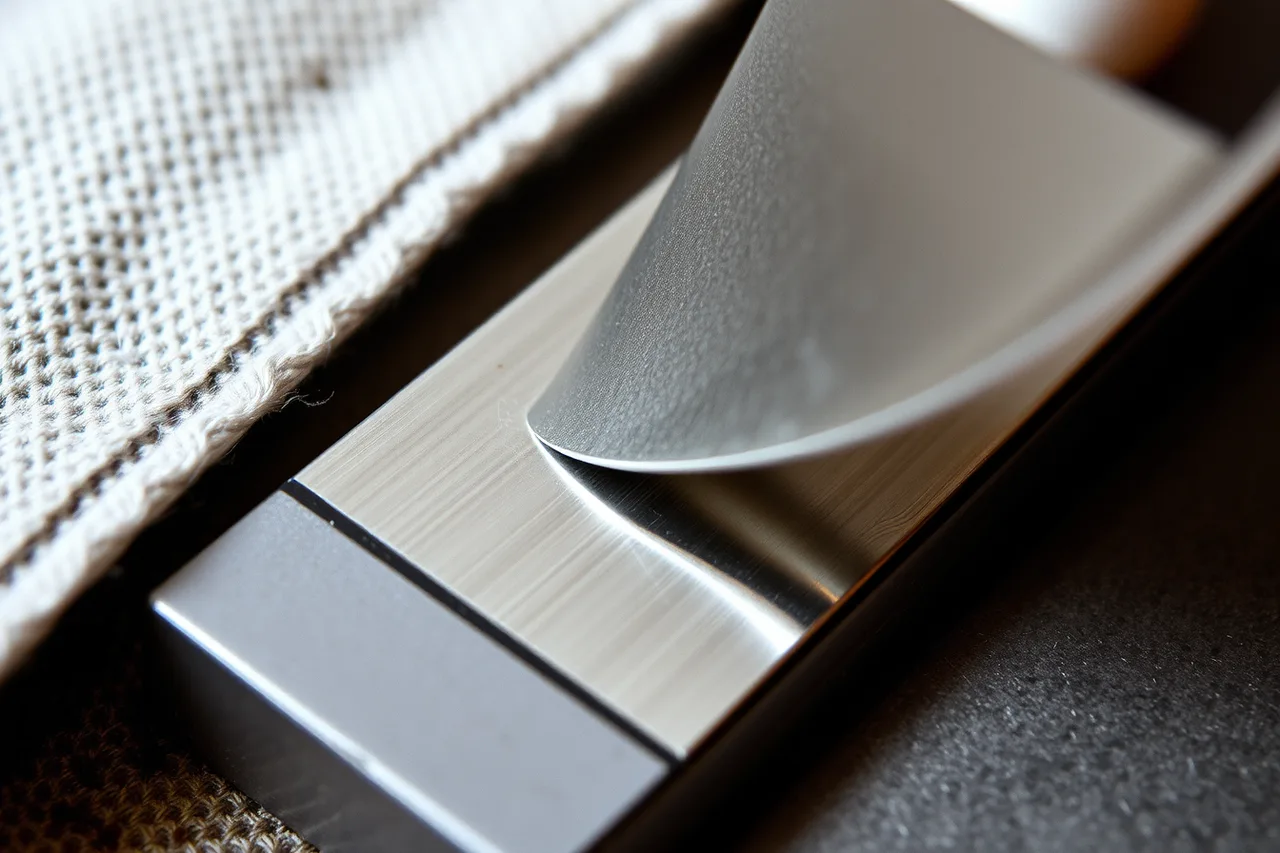
GIA's platinum benchmark describes burnishing plus light buffing for a substantial worn ring and says burnishing can avoid unnecessary removal from light scratches. Silver behaves differently, so a matching silver trial must establish whether displacement is acceptable.
Satin finish
A satin field depends on repeatable direction, overlap, texture scale, and transition. It can hide handling marks better than a mirror surface, but repairs often show if their direction or particle pattern differs.
Define whether the texture follows the object's length, circumference, radial center, or another datum. Protect polished borders and engraving with a tested mask or working boundary.
Oxidized or patinated finish
An oxidized design deliberately controls color through surface chemistry. Specify alloy preparation, reagent system, temperature, time, color sample, rinse, neutralization if required, selective removal, and seal. Natural tarnish is not automatically an acceptable substitute.
The finish will wear differently on high points, rings, clasps, and skin-contact zones. Design whether that evolution is acceptable and explain compatible cleaning.
Plated finish
Plating adds metal rather than only changing the silver. Base preparation, strike or intermediate layer, bath control, thickness distribution, coverage in recesses, adhesion, porosity, masking, and post-treatment affect the result.
Do not polish through a coating to make one area match. Identify whether the visible defect is in the plate, under it, or in the base. Repair may require stripping and replating under a qualified process.
Selection questions
- Should the surface be cut, displaced, chemically changed, or coated?
- Which details and dimensions cannot change?
- How will the finish wear at contact and high points?
- Can it be cleaned without changing color or texture?
- Can a local repair match, or must the whole field be refinished?
- What samples and measurements will prove acceptance?
Common questions
Is satin less finished than mirror polish?
No. Satin is a deliberate controlled texture with its own direction and consistency requirements.
Is oxidized silver the same as dirty silver?
No. Intentional oxidation follows a designed process and color standard; soil and uncontrolled tarnish are different conditions.
Does burnishing remove no metal at all?
Its primary action is displacement, but later cleaning or buffing may remove material, and a damaged tool can abrade.
Can plated silver be polished like solid silver?
Only within the coating's documented limits. Abrasion can thin or remove the plate and expose the base.