
Rules
Silver craft labeling and the Indian Arts and Crafts Act
See how the Indian Arts and Crafts Act shapes silver craft origin claims, records, and seller practices in Santa Fe and Tucson.
What to take away
- The Indian Arts and Crafts Act makes it illegal to sell silver craft as Indian-made when it is not produced by a member of a federally or state-recognized tribe.
- Navajo, Zuni and Hopi silver traditions differ in technique and design, and buyers in Santa Fe and Tucson use those distinctions to judge authenticity.
- Santa Fe galleries and markets typically require proof of tribal enrollment, studio documentation and signed consignment terms.
- Tucson's gem and mineral shows operate under their own seller rules, and silver vendors must show both gemstone and origin paperwork.
- The Indian Arts and Crafts Board enforces the Act and publishes guidance for artisans and dealers.
Why the Indian Arts and Crafts Act governs Southwestern silver
The Indian Arts and Crafts Act is a truth-in-advertising law. It covers silver jewelry sold as Indian-made in the United States, whether the seller is a gallery on Canyon Road or a vendor at a Tucson show. The statute creates the Indian Arts and Crafts Board and sets penalties for misrepresentation.
You can read the full statutory text at 25 U.S. Code § 305.
For a silversmith, the Act means one thing: the maker's tribal citizenship must match the label. "Navajo-made" or "Zuni-made" is a legal claim, not a style description. A non-Native jeweler can make silver in a Navajo style, but cannot sell it as Navajo work.
Santa Fe and Tucson sit at the center of this trade. Santa Fe has a concentrated gallery market with high tourist demand. Tucson hosts the largest gem and mineral show in the world, drawing silver suppliers and buyers from many countries. Both markets depend on clear origin claims.
Enforcement is not abstract. The Indian Arts and Crafts Board investigates complaints and works with federal prosecutors. Its guidance for buyers and sellers explains what counts as Indian-made and how to report violations.
The Board's pages are the practical reference for dealers who need to check a claim before listing silver. The Indian Arts and Crafts Board publishes that guidance and enforcement information.
Navajo, Zuni and Hopi silver styles and their market identity
Navajo silverwork is known for heavy stamping, hand-wrought sheet and cast elements. Early Navajo smiths worked with Mexican and Spanish techniques, then developed their own stamp designs. Today Navajo jewelers often sign with a hallmark or a name stamp. Buyers in Santa Fe look for that mark first.
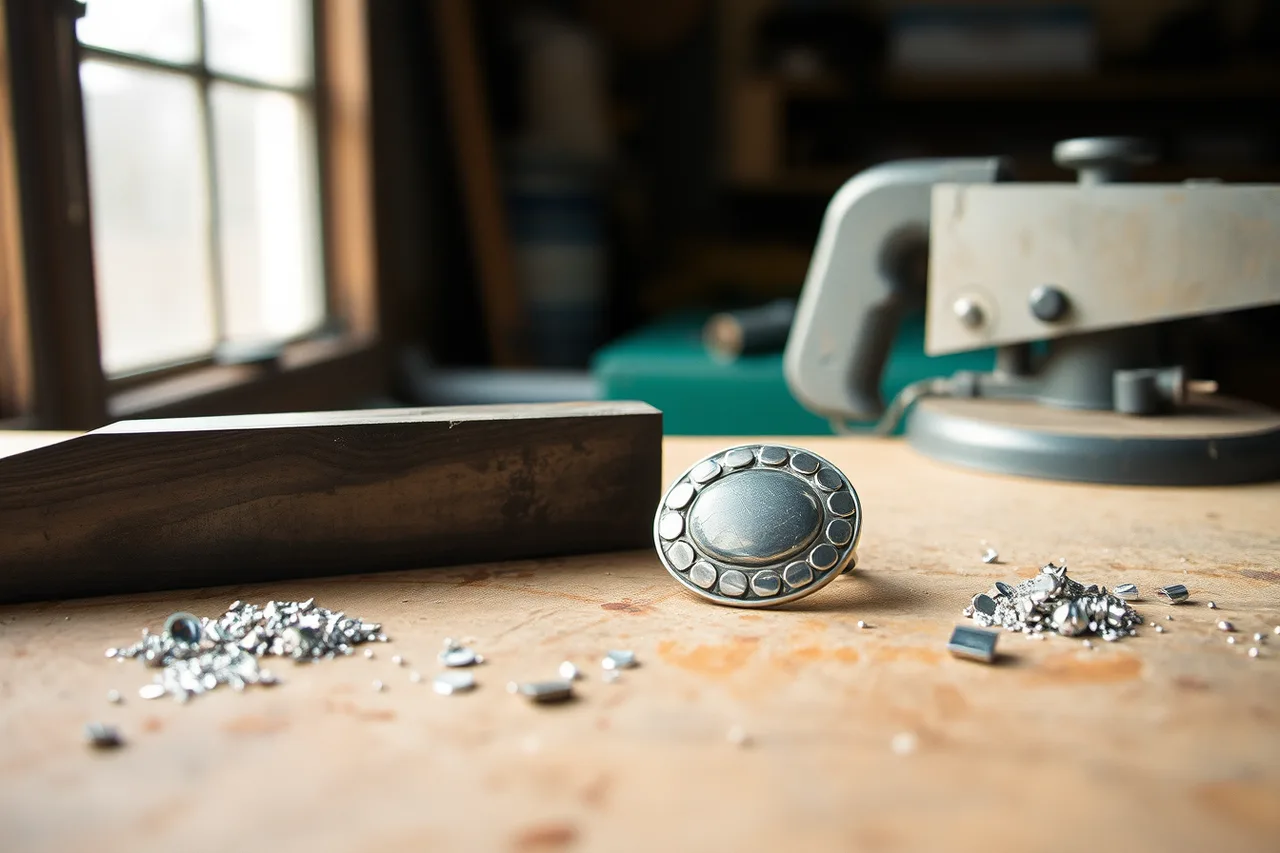
Zuni silverwork is associated with fine stone inlay, needlepoint and petit point cluster work. Zuni artists set small cut stones into silver channels or raised bezels. The style is labor-intensive and the stonework is usually the main value. A Zuni cluster bracelet with matched turquoise is not the same product as a Navajo stamped cuff.
Hopi overlay silver uses a layered technique. The artist cuts a design into a top sheet of silver, solders it over a darker oxidized base, then finishes the surface. The result is a two-tone relief pattern. Hopi overlay is often confused with machine-stamped overlay, so buyers ask about the maker's process.
These distinctions matter for pricing and for legal labeling. A gallery that sells a Hopi overlay piece as Navajo work has mislabeled it, even if the silver content is the same. Makers should keep process notes and photos that show the technique.
Silver content itself is a separate issue. Most Southwestern jewelry is made from sterling silver, which is 92.5 percent silver. Some older pieces are coin silver or have no mark at all.
If you are unsure about an unmarked piece, the steps in identify and document an unknown silver-colored metal can help you record weight, marks and test results before you describe it to a buyer.
What the Indian Arts and Crafts Act requires of sellers
The Act prohibits offering or displaying for sale any good in a way that falsely suggests it is Indian-produced. That covers labels, signs, oral claims and online listings. A seller who says "Indian-style" may still cross the line if the overall presentation implies tribal origin.
Four requirements matter most for silver sellers.
What the Act requires
- Verify the maker's tribal citizenship before using an Indian-made label. A tribal enrollment number or a letter from the tribe is standard proof.
- Keep a written record of who made each piece. Record the artist's name, tribal affiliation and the date of purchase.
- Label accurately. If a piece is made by a non-Native artisan in a Native style, say so plainly.
- Do not use a tribal name, seal or slogan in a way that implies official endorsement.
Penalties can include fines and, for repeat violations, criminal liability. The Act applies to individual sellers, galleries, auction houses and online marketplaces. A seller cannot avoid liability by saying the buyer should have known better.
The Indian Arts and Crafts Board is the main federal body for enforcement and guidance. It reviews complaints, refers cases for prosecution and publishes educational material. The Board also maintains a source directory that helps buyers find enrolled artists.
Tax rules run alongside the labeling rules. Native artisans who sell silver are subject to federal income tax, and tribal governments have their own rules. The IRS page on Indian tribal governments explains the general framework for tribal businesses and artists.
A seller who ignores tax reporting can face problems even when the artwork label is correct.
What Santa Fe galleries and markets ask of silver sellers
Santa Fe has a dense gallery market, and most galleries apply stricter rules than federal law requires. Common requirements include a signed consignment agreement, a current artist biography and proof of tribal enrollment for any work labeled Indian-made.
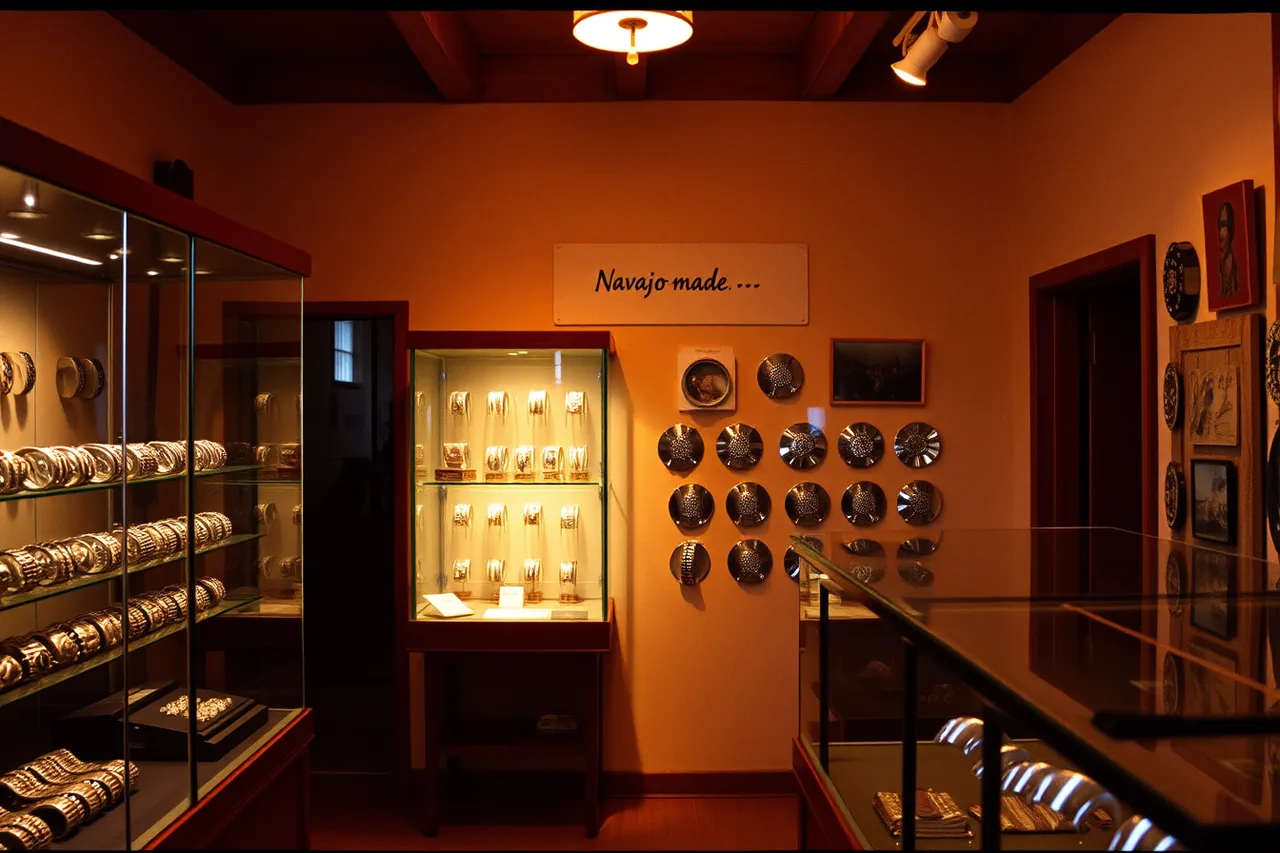
Galleries on Canyon Road and around the Plaza often ask for a certificate of Indian blood or a tribal enrollment card. They may also ask for a studio visit or a short video showing the artist at work. This is a business practice, not a legal requirement, but it protects the gallery from mislabeling claims.
Market sellers face similar checks. The Santa Fe Indian Market, run by the Southwestern Association for Indian Arts, requires artists to submit proof of tribal citizenship with their application. Booth rules prohibit resale of work by non-enrolled makers. Artists who share a booth must each qualify.
A gallery may also require a written description of materials and techniques. That description feeds the label, the invoice and the insurance record. The anneal and form silver band record checklist shows the fields a gallery typically wants: metal type, stone type, weight and maker.
For higher-value pieces, some Santa Fe galleries ask for a provenance file. That file can include the original receipt, a photo of the maker holding the piece and any previous appraisal. If you have an inherited silver object with no paperwork, a gallery may still accept it on consignment, but it will usually label it as "maker unknown."
A practical checklist for Santa Fe sellers:
- Tribal enrollment proof for every artist named on a label
- Signed consignment or purchase agreement with the gallery
- Written materials description, including silver fineness and stone types
- Artist biography and hallmark image
- Photos of the piece before delivery
- Insurance value and return terms in writing
- Tax identification and resale certificate on file
Tucson show rules vary by venue
Tucson's gem and mineral shows run from late January into February each year. The shows are spread across many venues, and each venue sets its own seller rules. Some shows focus on wholesale, some on retail, and some on beads, tools or finished jewelry.
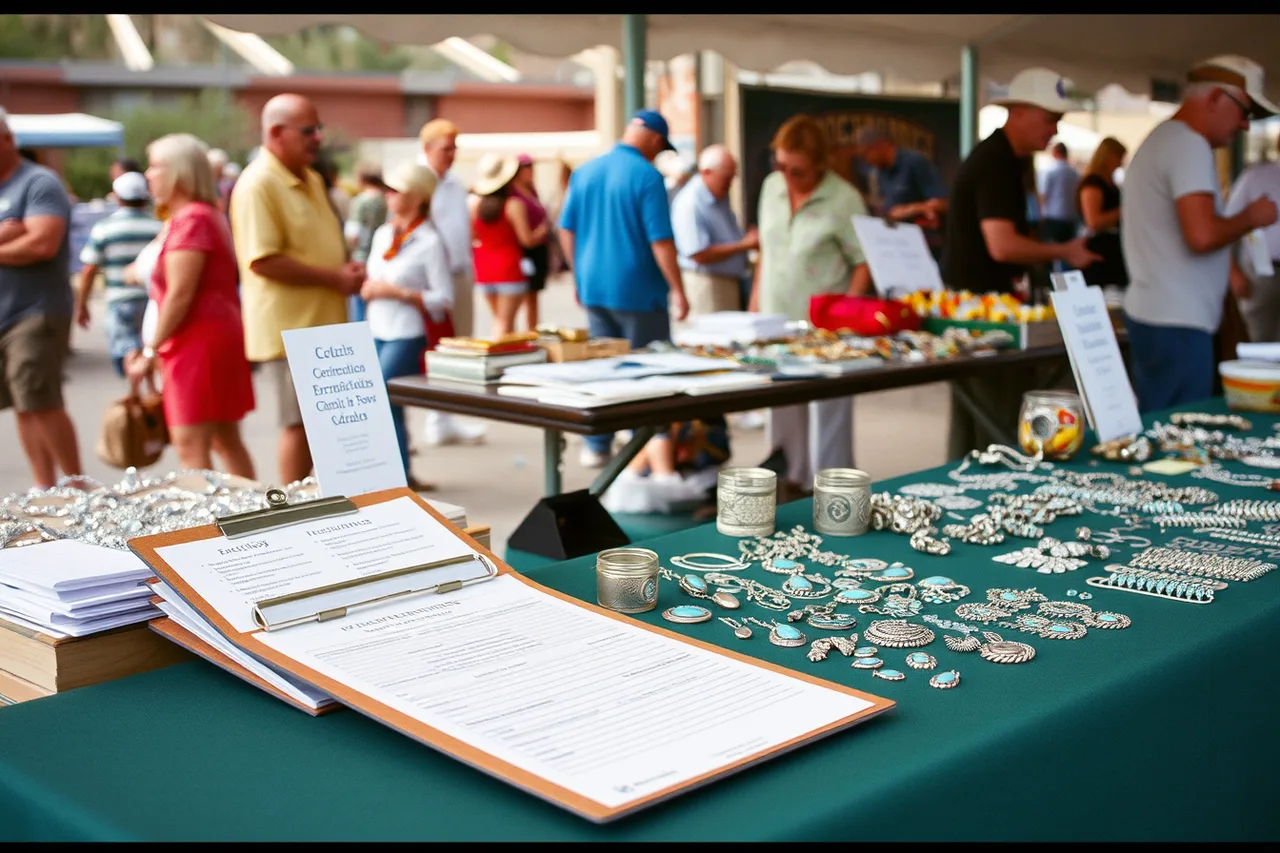
Silver vendors at Tucson shows generally need a business license, a seller permit for the venue and proof of product origin for gemstones. Show organizers may require invoices from suppliers for any colored stones. That paperwork helps customs and tax authorities trace goods.
For Native-made silver, Tucson show rules follow the Indian Arts and Crafts Act. A booth that sells Navajo or Zuni silver as Indian-made must be able to show that the maker is enrolled. Some shows ask for a copy of the enrollment document at registration.
Import rules also apply. Silver and gemstones brought into the United States must clear US Customs and Border Protection, and the importer needs accurate country-of-origin documents. A Tucson seller who buys imported silver components should keep those records separate from Native-made inventory.
The Federal Trade Commission Jewelry Guides govern how you describe metal content and gemstone treatments. A Tucson booth that says "sterling" must meet the sterling standard, and a treated stone must be disclosed. These rules apply alongside the Indian Arts and Crafts Act, not instead of it.
A worked example shows how the pieces fit. Suppose a Tucson vendor buys 50 sterling silver castings from a supplier in another country, then hires a Navajo artist to finish and stamp them.
The finished pieces are Indian-made if the artist is enrolled and the work is substantially the artist's own. The vendor still needs supplier invoices for the castings and a record of the artist's contribution. If the vendor sells the castings without the artist's work, the Indian-made label is not allowed.
Documentation and disclosure when selling Southwestern silver
Good records protect both the maker and the buyer. Start with the maker's enrollment document and a signed statement that the artist produced the piece. Keep a photo of the hallmark and a description of the materials.
For stock control, use a simple numbering system. A hallmark, supplier, and batch-record checklist can track which batch a piece came from, who made it and when it was sold. That record is useful if a buyer later questions the label.
Disclosure should be plain. If a piece is assembled from imported components, say so. If a stone is treated, say so. If the maker is not enrolled, do not use a tribal label.
Written invoices should match the label. The invoice should name the artist, the tribe, the metal type, the stone type and the price. A buyer who resells the piece will rely on that invoice.
Finally, keep records long enough to answer a complaint. The Indian Arts and Crafts Board can act on complaints years after a sale. A seller with clear documentation can resolve a question quickly.