Reviews
Part of Silver forming guide: hammers, stakes, mandrels and shape control
Raising, sinking, forging, bending, and die forming compared
Silver forming methods compared by metal movement, tooling, stock limits, section change, surface effects, repeatability, measurement, and shop safety.
What to take away
- These methods move metal by different combinations of compression, stretching, bending, and constrained flow.
- Choose from geometry, stock condition, section limits, quantity, surface requirement, tool access, and training.
- Raising builds depth through repeated hammer courses over a stake; sinking drives sheet into a hollow support.
- Forging changes section under impact, while bending primarily changes direction around an axis or form.
- Die forming can repeat a controlled shape, but die design, press setup, stock limits, and guarding remain separate engineering tasks.
No method is automatically more handcrafted, durable, or efficient. A one-off shallow dish, a tapered cuff, a production blank, and a structural clasp ask different questions.
Side-by-side view
Main action
- Raising
- Compresses and lifts sheet in courses
- Sinking
- Stretches sheet into a depression
- Forging
- Redistributes section under blows
- Bending
- Changes angle or curvature
- Die forming
- Constrains stock between or against forms
Typical support
- Raising
- Contoured stake
- Sinking
- Wood block, sandbag, or die
- Forging
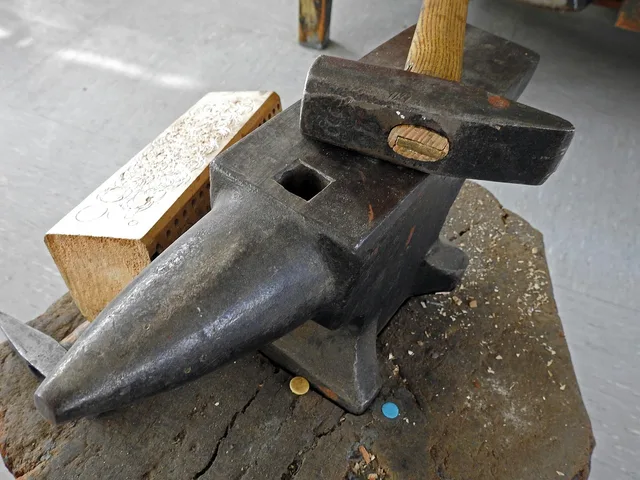
- Anvil, stake, or block
- Bending
- Mandrel, stake, jig, or brake
- Die forming
- Matched or single-sided tooling
Primary control
- Raising
- Course angle, overlap, wall thickness
- Sinking
- Depth, rim behavior, thinning
- Forging
- Direction of spread, thickness, length
- Bending
- Bend line, radius, springback
- Die forming
- Pressure, alignment, clearance, stock limit
Raising
Raising is suited to hollow forms built from sheet without cutting the wall into separate panels. The hammer works against a stake in systematic courses. The angle and contact point direct metal upward and inward.
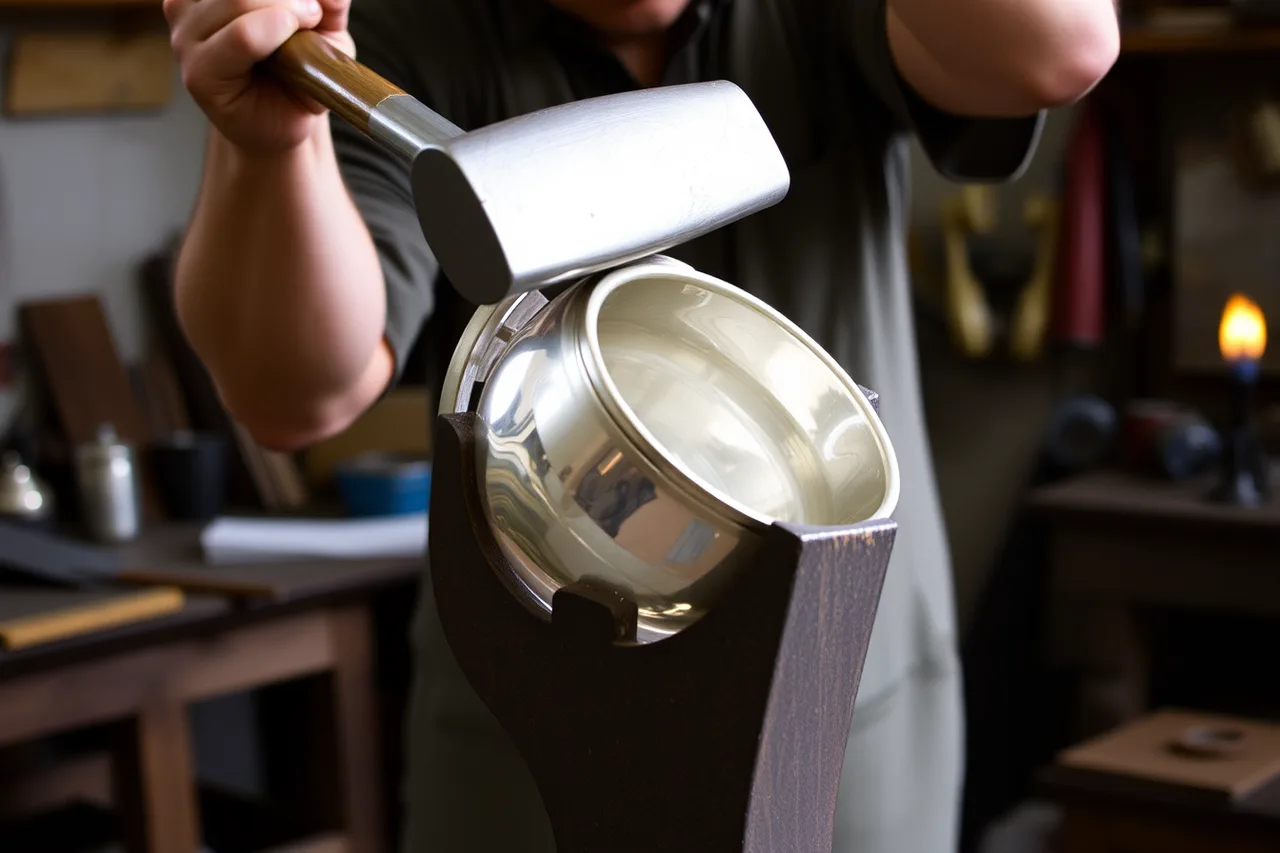
The University of Delaware's account of historic silversmith training describes controlling sheet over a contoured stake and coordinating hammer contact with the metal's angle. It documents a teaching experience, not a specification for modern alloy, wall thickness, or annealing.
Raising usually demands repeated measurements and annealing stages. It can preserve material while creating deep forms, but uneven courses can produce lobes, thin zones, or a wandering rim.
Sinking
Sinking drives metal into a hollow support. It is useful for shallow bowls, domes, and initial depth. The process tends to stretch the region being driven, so thickness maps and rim inspection matter.
A sandbag provides broad yielding support; a carved block or die provides a more defined contour. The same blow produces different movement on each.
Forging
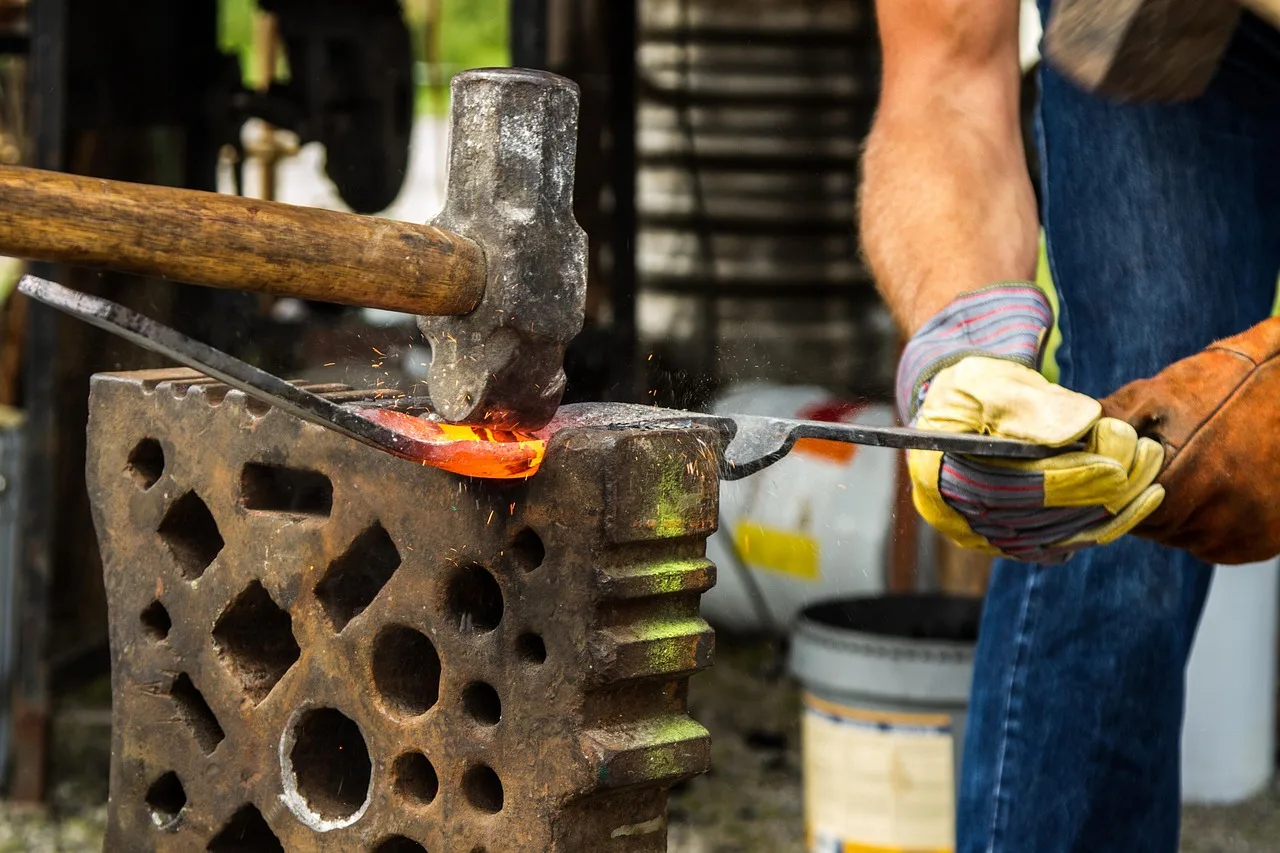
Forging changes cross-section by focused impact. A peen can lengthen material in a preferred direction; a broad face can spread and level. It suits tapers, transitions, and controlled section changes.
Measure more than overall length. Track width and thickness at named stations. A visually even taper may hide a thin point.
Bending
Bending changes the path of strip, wire, tube, or sheet around a form or line. Elastic springback means the released part may not match the tool contour. Alloy, temper, section, radius, and direction relative to previous work affect the result.
Bending can be gentle or severe. A tight bend across a damaged edge can start a crack even when the center looks sound.
Die forming
Die forming can produce repeated domes, shells, embossments, or bends. It shifts much of the geometry control into the tool, alignment, clearance, pressure, lubrication, stock placement, and release procedure.
Monterey Peninsula College's Jewelry and Metal Arts catalog lists die forming, sinking, and raising as advanced metalsmithing techniques using dies, stakes, hammers, sandbags, and wooden forms. That curriculum evidence does not authorize a press or define a safe die.
Use press and die equipment only after machine-specific training. Guard pinch points, follow rated capacity, inspect dies, and keep hands outside the operating zone.
Selection questions
- Which dimensions and minimum sections are fixed?
- Where may stretching or compression occur?
- Must the surface remain smooth or carry hammer evidence?
- How many matching parts are required?
- Which method preserves inspection access?
- When will the stock need annealing or intermediate stress relief?
- What failure ends the operation?
Common questions
Is sinking the first step of every raised vessel?
No. The sequence depends on design, stock, tools, and maker's qualified method.
Does die forming eliminate hand finishing?
No. Parts still need release, dimensional, edge, surface, and defect checks.
Is bending free of thickness change?
Do not assume so, especially at tight radii or damaged sections.
Which method is best for a cuff?
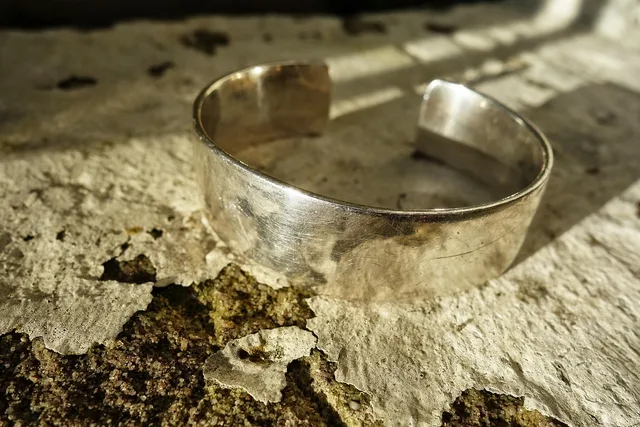
Choose from the cuff's section, taper, contour, opening, surface, quantity, and tested process.