
Reviews
Where US silver craft shops buy sheet, wire and grain
For silver craft work in the US, buy sheet and wire from mill suppliers like Rio Grande, Stuller and Indian Jewelers Supply, and grain from refiners.
What to take away
- Silver craft buying in the US splits into three channels: a full-line mill supplier, regional findings houses, and refiners who sell grain and take scrap.
- Rio Grande sells sheet, wire and casting grain by weight, with published per-ounce pricing that moves with the market.
- Indian Jewelers Supply and similar regional houses carry findings, solder and tools that mill suppliers treat as side lines.
- Refiners set the highest minimums, often on grain lots rather than single ounces, and usually pay on scrap after assay.
- Shipping cost and insurance, not the metal price, decide whether a small order is worth placing.
- Batch records tie a supplier lot number to the finished piece, which is what a hallmark claim actually rests on.
What small silver shops actually buy and in what form
A working silversmith buys metal in three shapes: sheet, wire and casting grain. Each has its own price basis. Sheet and wire are sold by troy weight in defined thicknesses and gauges. Grain is sold by weight in a free-pouring form for casting.
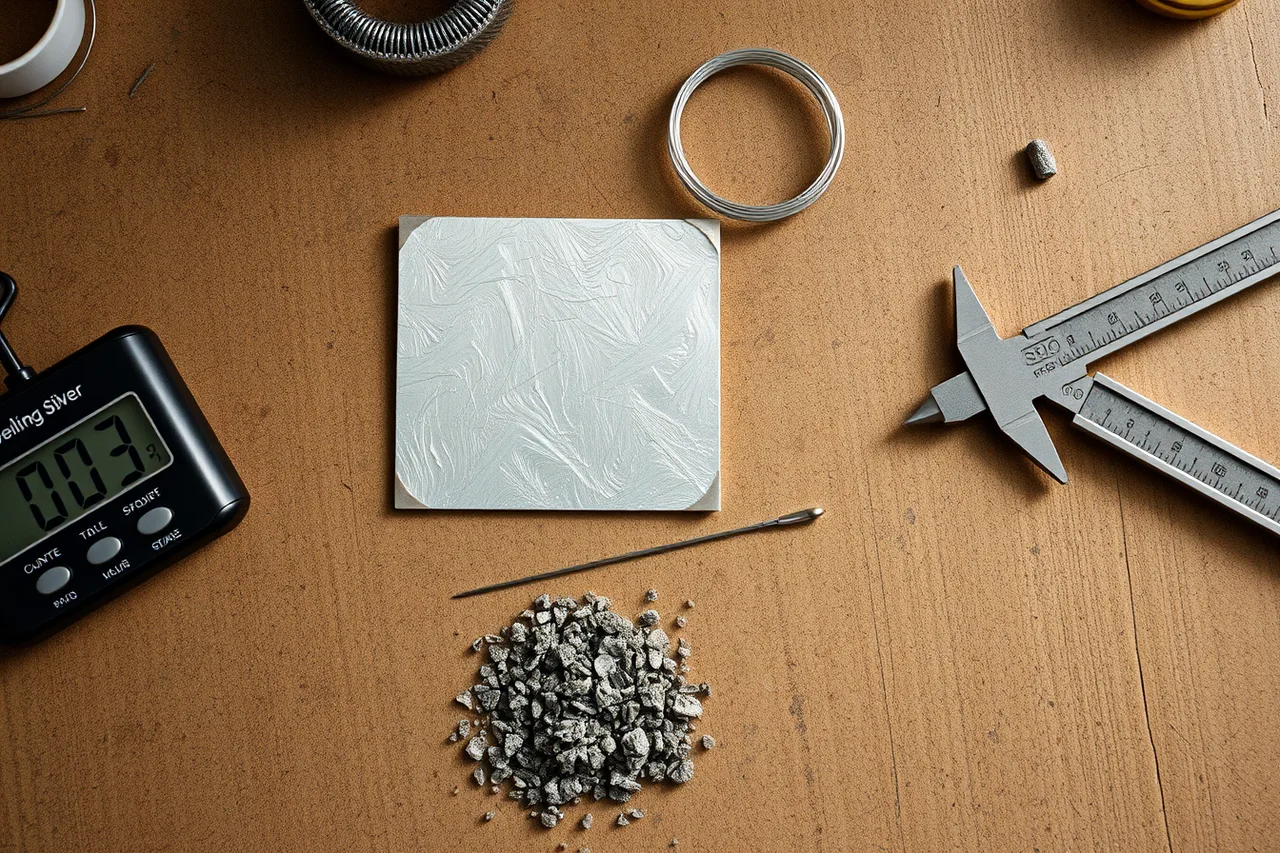
Sterling silver, 92.5 percent silver, is the default alloy in the US market. Fine silver, at 99.9 percent, is softer and used where malleability matters more than wear. Alloy choice changes price, working behavior and how you mark the finished piece.
The silver alloys guide is worth reading before you commit to a large sheet order.
Most small shops buy sheet in small increments: a few inches by a few inches, in 18 to 24 gauge, for bezels, backs and formed bodies. Wire is bought by gauge for bezel strip, jump rings, ear posts and chain links. Grain is bought in small lots by casters and by shops that run production runs rather than one-offs.
Weight is the unit of trade, so your scale matters as much as your supplier. Commercial scales used in retail and trade are governed by state weights and measures programs that follow NIST Handbook 44 for accuracy and labeling.
If you buy by the ounce and resell by the ounce, a scale that drifts costs you money on both ends.
Silver is a small part of US mineral production by volume but a real one by value. The USGS National Minerals Information Center publishes the underlying resource and production data, including silver, that sits behind the price you pay at the counter.
New shops often overbuy. A first order of one sheet, one wire gauge and one small grain lot covers most bench work. The bench, tool, and safety checklist covers what else has to be in place before that metal is safe to work.
Rio Grande as a primary US supplier of sheet, wire and casting grain
Rio Grande is the best-known full-line supplier to the US jewelry trade, based in Albuquerque, New Mexico. It sells sterling and fine silver sheet, wire, casting grain, findings, solder and bench tools from one catalog. For a small shop, that single source matters: one order, one shipping charge, one lot record.
Stuller, based in Lafayette, Louisiana, is the other full-line name most US shops know. It sells sterling and fine silver sheet, wire, casting grain, findings, solder and tools to the trade, alongside finished jewelry and stones. A shop comparing mill suppliers usually puts Rio Grande and Stuller side by side and checks gauge availability first.

Sheet is sold by dimension and gauge, priced by troy ounce. Wire is sold by gauge and temper, also by weight. Casting grain is sold by weight in sterling, fine silver and other alloys.
Because the catalog spans tools and metal, Rio Grande is often the first call for a shop that has neither a rolling mill nor the volume to justify a refiner relationship.
Albuquerque's position matters to shipping times. Orders to Arizona, Texas, Colorado and southern California typically arrive faster than orders to the Northeast. That is a practical reason New Mexico and Arizona shops lean on Rio Grande for restock, while Rhode Island and New York shops sometimes split orders between Rio Grande and a nearer findings house.
Rio Grande also publishes technical reference material on alloys, solders and finishing, which is useful when you are matching a solder to a sheet alloy. If you are deciding between fine and sterling for a given piece, the tradeoffs are the same ones set out in the fine silver vs sterling silver comparison.
What Rio Grande does not do is take your scrap on favorable terms. That is a refiner function. Most small shops run both relationships: Rio Grande for new metal and findings, a refiner for scrap credit.
Indian Jewelers Supply and regional findings sources
Indian Jewelers Supply is the long-standing supply house associated with the Native American jewelry trade, historically based in Gallup, New Mexico, with a catalog built around the needs of Southwestern smiths. It carries sheet, wire, solder, findings, stones and tools, and it is a normal first stop for shops in New Mexico and Arizona.
Thunderbird Supply, also in Gallup, New Mexico, is the other long-standing regional house for that trade, stocking sheet, wire, findings, stones and bench tools for Southwestern smiths. Between the two, a shop in Arizona or New Mexico rarely has to look outside the region for findings.
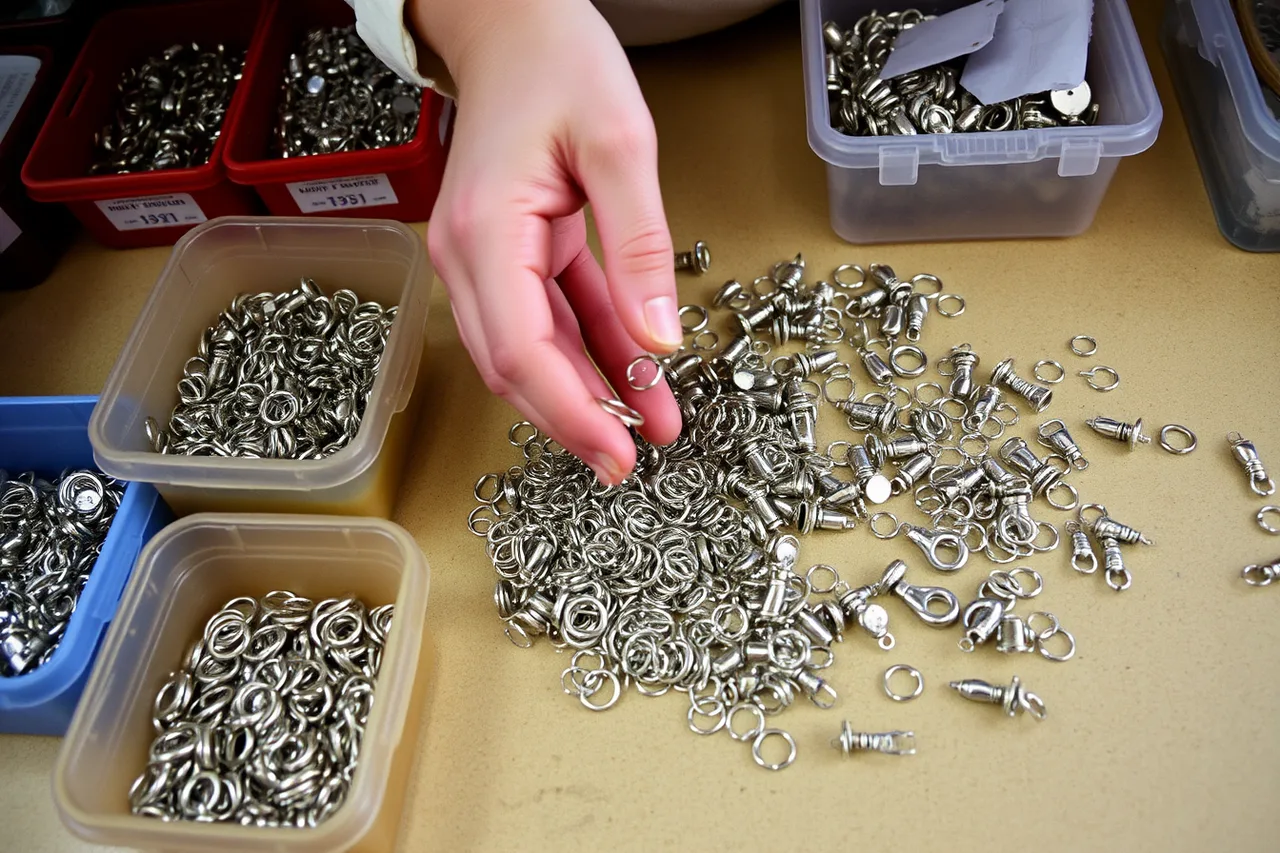
The regional findings houses matter for a simple reason: findings are high-turnover, low-value parts. Jump rings, ear wires, clasps, bezel cups and pin backs are cheaper to buy than to make, and a supplier that stocks them in the gauges you actually use saves bench hours.
A mill supplier will carry findings, but a findings-focused house often carries more of them.
Regional patterns in the US trade are real. Rhode Island has a long costume and fashion jewelry manufacturing history, so findings and plating services cluster there. New York supports the high-end and diamond trade. Arizona and New Mexico support Southwestern and Native American work.
Texas and Illinois carry general jewelry manufacturing and repair. Washington and California carry studio and craft-oriented benches.
Trade bodies tie these regions together. The Society of North American Goldsmiths serves studio and academic metalsmiths. The American Craft Council covers the craft market side. The Gemological Institute of America sets the stone-grading reference that matters when a piece includes set stones.
If your work is one-off and stone-set, buy findings locally where you can inspect them, and buy metal from whichever supplier has the gauge in stock. Stockouts, not price, are the usual reason a small shop switches suppliers mid-project.
How US refiners handle casting grain and scrap
Refiners sit at the other end of the market. They buy scrap, sweeps, bench filings and old stock, assay it, and either pay out or credit it against new grain. For a shop generating filings and failed castings, that loop is where metal cost is recovered.
Two US refiners that work with the jewelry trade are Hoover & Strong, in Richmond, Virginia, and United Precious Metal Refining, in Alden, New York. Both refine scrap and bench sweeps for jewelers and sell casting grain and alloys, which makes them the usual names behind the grain side of a small shop's buying.
Minimums are the barrier. Refiners typically set a minimum lot weight for scrap processing and a separate minimum for grain purchases, and those minimums are usually larger than a one-person shop generates in a month. Some refiners accept smaller lots but hold payment until a batch accumulates, or charge a processing fee that eats the value on small lots.
Casting grain bought from a refiner is usually priced closer to the spot market than catalog grain, with the tradeoff of a larger minimum and less flexible alloy selection. A shop casting regularly can justify that. A shop casting twice a year usually cannot.
Scrap terms vary in ways worth reading closely: assay charges, settlement delay, whether sweeps are settled separately, and whether the refiner pays in cash or credit. Credit against grain is often the better deal for a working shop because it skips a buy-sell spread.
Silver supply and price context comes from public data, not from supplier marketing. The USGS publishes annual Mineral Commodity Summaries covering silver supply, and the agency's Silver Statistics and Information page collects the production and reserve figures behind it.
Reading those once a year is enough to know whether a refiner's settlement offer is in line.
Import rules matter if you buy foreign grain or scrap. US Customs and Border Protection regulates precious metal imports, and the FTC Jewelry Guides govern how you may describe and mark what you sell. Neither is optional for a shop selling publicly.
Comparing channels: metal forms, order minimums and shipping
Price comparison in this trade is not a single number. Sheet, wire and grain are quoted differently, and shipping and minimums can outweigh a small per-ounce difference. The table below sets out the practical shape of each channel.
Comparing prices, minimums and shipping
Typical metal forms
- Rio Grande
- Sheet, wire, grain, findings, solder, tools
- Indian Jewelers Supply and regional findings houses
- Sheet, wire, findings, stones, tools
- US refiners
- Casting grain, scrap settlement
- Local pawn and scrap buyers
- Scrap only
Minimum order pattern
- Rio Grande
- Low, single-item orders accepted
- Indian Jewelers Supply and regional findings houses
- Low to moderate, findings sold in packs
- US refiners
- High, by lot weight; separate scrap minimum
- Local pawn and scrap buyers
- Very low
Shipping and terms
- Rio Grande
- One consolidated shipment, insured; rate scales with weight and value
- Indian Jewelers Supply and regional findings houses
- Regional speed advantage in the Southwest; smaller parcels
- US refiners
- Settlement delay and assay charges; credit against grain common
- Local pawn and scrap buyers
- Fast cash, poor price, no traceability
Three rules keep small orders economical. First, buy metal and findings in one order where the supplier allows it, because shipping is charged once. Second, buy the gauge you will use within a few months, not the gauge that is cheapest per ounce, since unused sheet ties up cash.
Third, insure anything above the carrier's default coverage; silver is a theft target in transit.
A worked example. A one-person shop needs two square feet of 20 gauge sterling sheet, one ounce of 18 gauge sterling wire, and a quarter ounce of sterling grain for a small casting run.
Ordering all three from one mill supplier produces one shipment and one lot record. Splitting the order across a mill supplier, a findings house and a refiner produces three shipping charges and three lot records to reconcile. That is only worth it if one of the three is materially cheaper on that line.
Price basis matters more than headline price. Sheet is priced per troy ounce at a given gauge, so a thinner sheet costs less per piece but more per ounce of working volume lost to filing.
Grain is priced per ounce with less fabrication labor built in, which is why grain is cheaper per ounce than sheet of the same alloy.
Before you place a first order with any supplier, work through this checklist.
- Confirm the alloy and fineness you are buying, and that it matches the mark you intend to stamp
- Confirm the gauge or thickness and the tolerance the supplier holds
- Ask for the lot or batch number on the invoice
- Check the minimum order value and whether findings count toward it
- Check shipping cost, insurance limit and delivery time to your ZIP code
- Confirm the return or exchange policy on cut sheet and wire
- Save the invoice and packing slip with the lot number for your records
Bookkeeping is part of this. Metal purchases, shipping and assay fees are business expenses, reported on IRS Schedule C for a sole proprietor filing Form 1040. If you are financing a larger metal buy, SBA loan programs are the standard route for a small shop.
The failed silver box seam method covers how those costs land on a single piece.
Batch records and hallmark traceability from supplier to finished piece
A batch record is the paper trail from supplier lot to finished piece. It starts with the invoice lot number and ends with the piece you sell. Without it, a fineness mark is a claim you cannot support.
The chain has four links. The first is the supplier invoice with its lot or batch number. The second is your own bench record of which lot went into which piece or production run.
The third is the assay or test result if you test. The fourth is the final mark struck on the piece. Break any link and the piece is untraceable.
This matters legally as well as commercially. The FTC Jewelry Guides govern how precious metal content may be described and marked in the US. A sterling mark means 92.5 percent silver, and the burden of showing that is on the seller.
Practical record keeping is simple. Write the lot number on the envelope or bag the metal came in. Log the date, lot, alloy and weight when you draw metal for a job. Photograph the finished piece with its job number. Keep invoices for the period your accountant needs.
The supplier, and batch-record checklist walks through the full sequence, from purchase order to struck mark, for a small shop.
Traceability also protects you on scrap. If you send filings and failed castings to a refiner and get grain back, that grain is a new lot with a new number. Record it as a new lot rather than folding it into old stock, or your bench records stop matching your invoices.