Reviews
Part of Silver sawing and piercing guide: layout, bench pin, turns and cleanup
Jewelry cutting methods compared: choosing a method
Jewelry cutting methods compared by geometry, access, stock, distortion, and cleanup, with guidance on when a jeweler's saw, snips, or disc cutter fits.
What to take away
- Choose a cutting method from the geometry, material, thickness, tolerance, edge condition, quantity, and next operation.
- A jeweler's saw handles detailed profiles and interior openings but depends on blade setup and hand control.
- Snips are quick on suitable sheet, yet they can curl the waste or distort the kept edge.
- A disc cutter is a shearing tool for supported round blanks, not a substitute for every circle-making method.
- Powered equipment requires its own training, guarding, work holding, exposure controls, and inspection.
Jewelry cutting methods compared here include the jeweler's saw, snips, and disc cutter, each suited to different work.
The fastest cut is not always the lowest-cost operation. A method that saves one minute but bends the stock, consumes too much finishing allowance, or creates a difficult burr can lengthen the whole job.
Comparison table
Best fit
- Jeweler's saw
- Curves, interior cutouts, one-off profiles
- Hand snips
- Accessible cuts in suitable sheet
- Disc cutter
- Repeated round blanks in compatible stock
- Powered saw or cutting tool
- Appropriate stock and repeated or heavier cuts
Main tradeoff
- Jeweler's saw
- Skill, time, blade breakage
- Hand snips
- Edge curl, jaw marks, limited interior access
- Disc cutter
- Fixed sizes, punch clearance, striking force
- Powered saw or cutting tool
- Higher consequence, guarding, heat, debris
Typical next step
- Jeweler's saw
- Controlled filing
- Hand snips
- Flattening and edge cleanup
- Disc cutter
- Deburring and inspection
- Powered saw or cutting tool
- Machine-specific cleanup
Jeweler's saw
The jeweler's saw is the most adaptable option here for a one-off outline or pierced opening. It can follow a transferred pattern and make a small kerf, provided the blade matches the stock and the work stays supported.
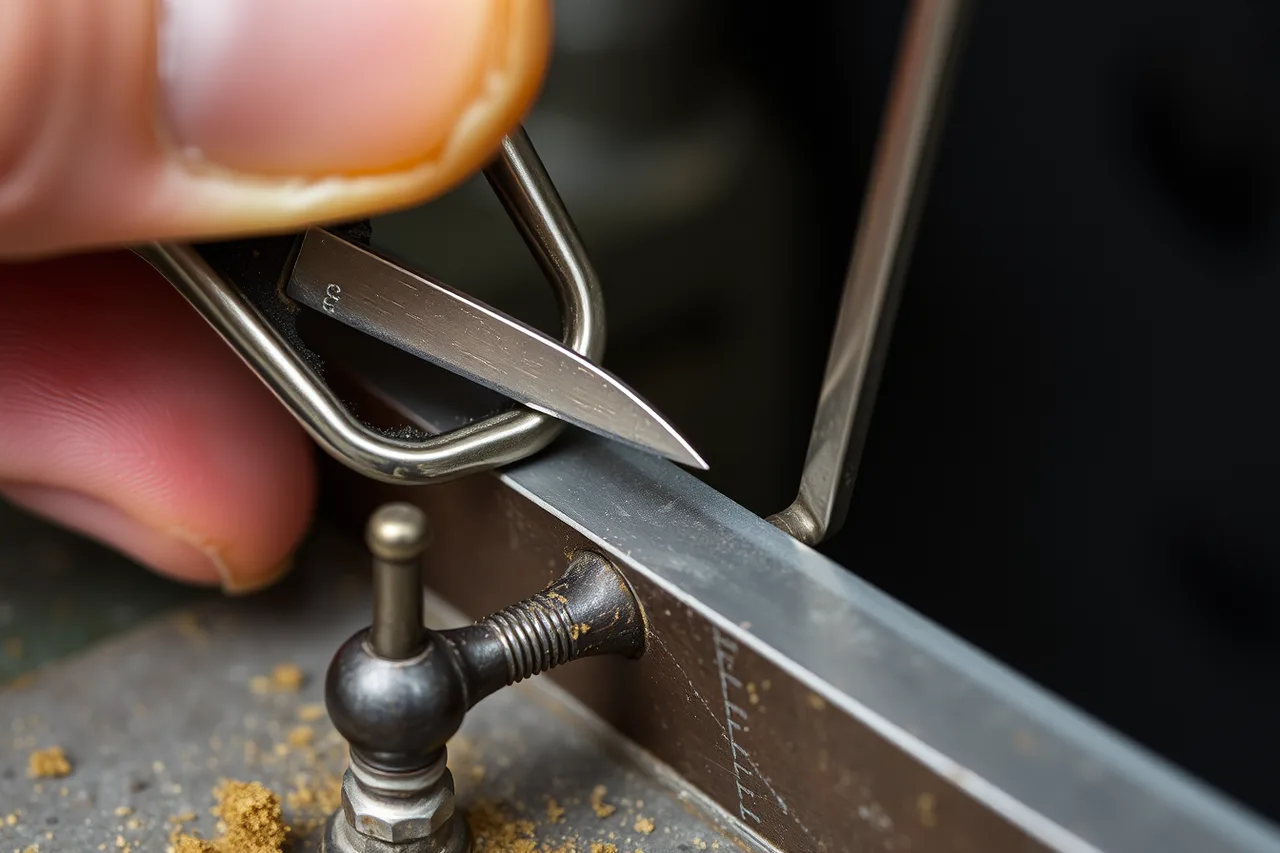
It also exposes every inconsistency in tension, side pressure, posture, and turning. Production speed rises through repeatable layout and motion, not force. Choose it when access, detail, or material conservation outweighs cycle time.
Snips
Snips shear from an exposed edge. They can rough out blanks quickly when the sheet, jaw geometry, hand force, and required radius are compatible. They do not begin an enclosed opening without another access cut.
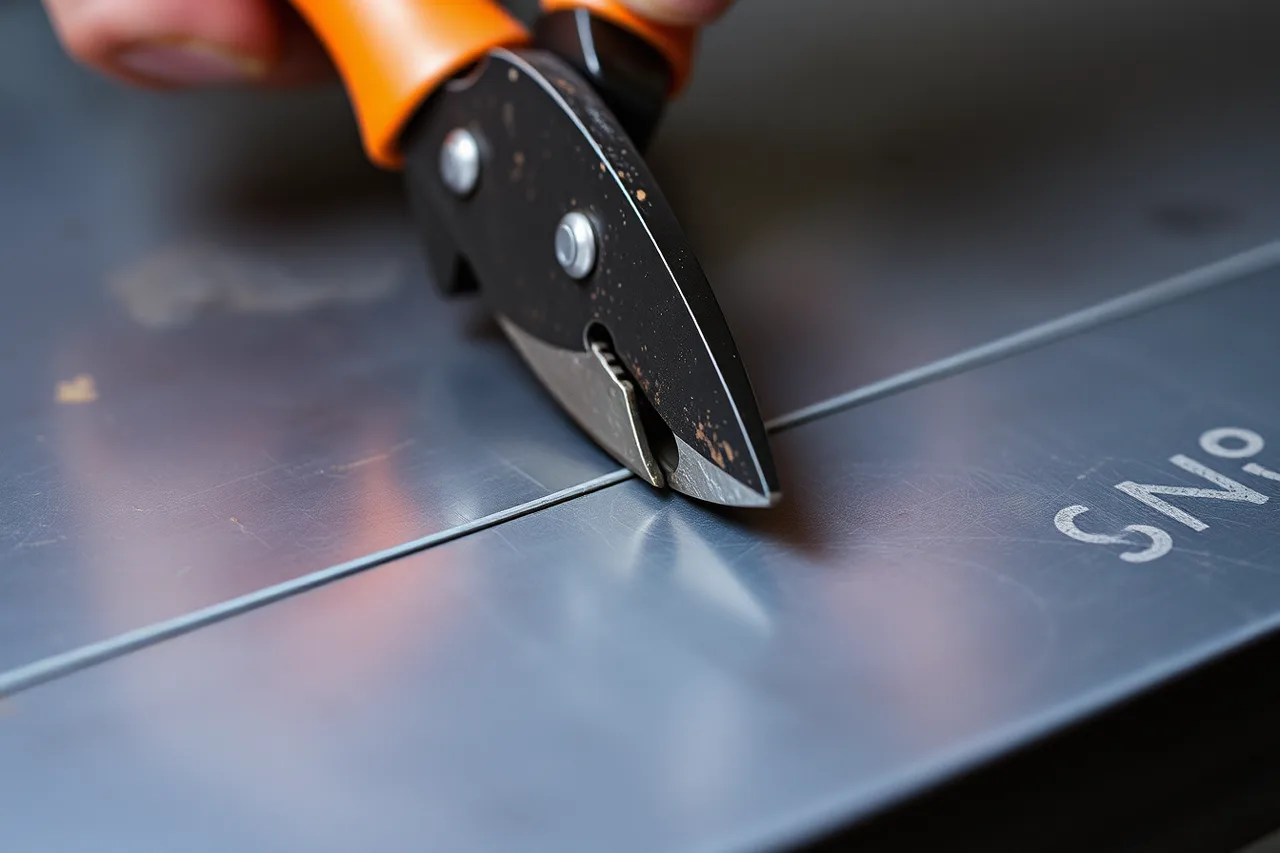
The waste side often curls. The kept side can also distort or acquire jaw damage. Mark the keep side, leave a measured allowance, and test the tool on the actual stock before approaching the final line.
OSHA's machine-guarding requirements overview identifies shears, power saws, and portable power tools among machines that commonly require point-of-operation guarding. The page addresses occupational equipment, not the technique or suitability of a handheld jeweler's saw.
Disc cutter
A disc cutter combines a matched punch and die to shear a round blank. It suits available die sizes and stock within the tool maker's specified range. Correct support, punch orientation, lubrication practice, striking tool, and alignment matter.
Do not substitute a steel hammer or stock thickness from habit. Follow the manufacturer's instructions. Keep fingers out of the punch path and control the work and offcut. Inspect both faces for burr, deformation, edge tearing, and tool marks.
When the required circle falls between die sizes, needs an interior hole, or must preserve a specific grain direction, sawing or another engineered method may be better.
Powered cutting
This category includes several machines and rotary processes with different blade, wheel, speed, guarding, clamping, spark, heat, chip, dust, and entanglement risks. "Powered" is not one process.
Use only equipment for which the material and operation are permitted. The University of Wisconsin-Milwaukee's studio equipment safety page calls for functioning equipment, user training, guarding, eye protection, and control of loose clothing and jewelry around powered shop tools. A local risk assessment must still address the specific machine and metal.
Powered cutting can improve throughput or handle stock outside a hand tool's range. It can also remove material too quickly, heat thin sections, throw debris, grab poorly held work, or damage a finished surface.
Decision sequence
Ask in order:
- Is the cut internal or accessible from an edge?
- What stock identity, thickness, temper, and construction are known?
- What radius, tolerance, and edge finish are required?
- How much distortion and finishing allowance can the design accept?
- Is this a one-off or repeated part?
- Which trained process has suitable work holding and controls?
- How will the cut be measured and released?
Record the choice when repeatability matters. A later operator should be able to distinguish the design requirement from the tool that happened to be available.
Common questions
Are snips faster than a jeweler's saw?
They can be for a suitable accessible cut, but distortion and cleanup may erase the time saved.
Does a disc cutter make a finished edge?
Inspect the result. Burr, deformation, surface marks, and dimensional tolerance still require attention.
Is a rotary tool a powered saw?
No. Different machines and attachments have different cutting action, hazards, and permitted uses.
Which method wastes the least silver?
Compare kerf, nesting, distorted margins, failed parts, and recoverable scrap for the actual job.