Maintenance
Part of Stone setting in silver guide: planning a setting
Stone setting security checklist: stage by stage
A stone setting security checklist that runs stage by stage: intake, seat geometry, tools, support, contact, security testing, and release records.
What to take away
- Hold the job when stone identity, treatment, damage, or mounting geometry is uncertain.
- Record the seat and holding metal as measured sections, not informal descriptions.
- Inspect the stone after every stage in which metal or tools approach it.
- Security does not excuse chips, gaps, overcut metal, sharp tips, or trapped debris.
- Final release includes maintenance and cleaning limits for the complete piece.
Use this stone setting security checklist for a new setting or a documented reset. Mark each item pass, fail, hold, or not applicable, and take every dimension from the approved drawing rather than treating this list as a specification.
Stone intake
- Stone identity and treatment status are recorded with their level of certainty.
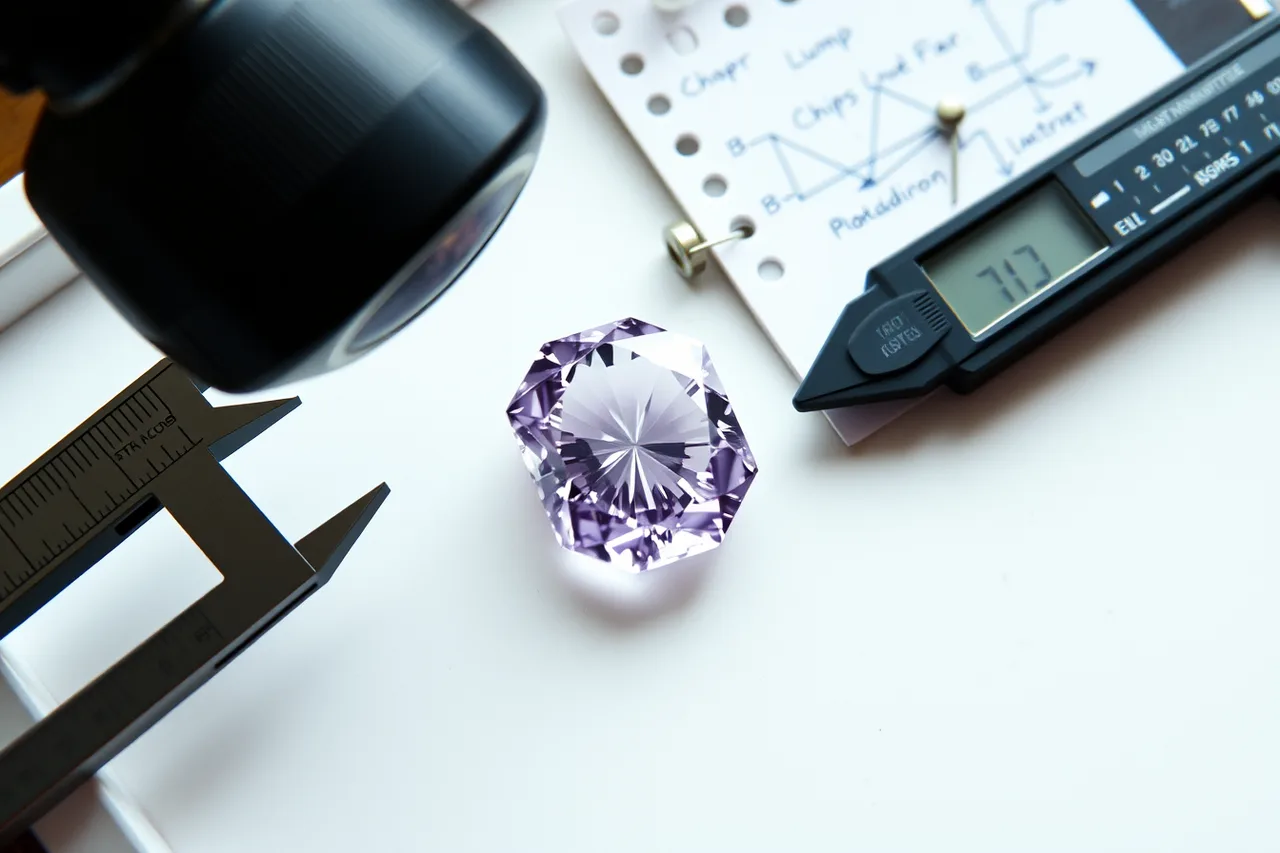
- Length, width, height, edge, pavilion or back, and orientation are measured.
- Chips, abrasions, fractures, cavities, inclusions, and previous setting marks are mapped.
- Stone durability and cleaning limits have qualified support.
- Photograph set covers top, bottom, sides, and vulnerable features.
- The stone can be safely handled and removed from a dry fit.
Setting drawing
- Setting type and holding action are named.
- Intended support and contact zones are shown in section.
- Stone level, tilt, and orientation limits are stated.
- Minimum wall, floor, backing, rail, web, prong, and bearing dimensions are stated.
- Solder seams, thin areas, marks, joints, and protected finishes are mapped.
- A correction, redesign, and rejection path is approved.
GIA's benchmark for a round center stone in platinum prongs shows inspection for even rounded prongs and notes that impact can move a prong outward and loosen a stone. Apply those observations only as inspection concepts; silver alloy, prong section, stone, and wear design require their own limits.
Tools and work support

- Burs, gravers, files, pushers, burnishers, and punches match the validated process, and each one is sharp, clean, and free of burrs, worn teeth, or bent shanks.
- Cutting edges, handles, collets, and powered-tool controls pass inspection: collets grip without wobble and burs run true in the handpiece.
- A loupe or binocular microscope, task lighting, and calipers are at the bench before work starts.
- Mounting support is stable and does not load the stone.
- Hands, stone, and finished surfaces remain outside tool slip and chip paths.
- Dust collection and required protective equipment are ready.
- Clean trays and labeled containers prevent stone or chip loss.
Empty-seat inspection
- Seat reaches the intended level without breaking through or undercutting a protected section.
- Support contact is continuous where the design requires it.
- Bearings match the stone profile without open gaps.
- Holding metal retains the minimum mass and height.
- Burrs, loose chips, abrasive, flux, and compound are removed.
- Dry fit does not bind, rock, or require force.
Setting sequence
- Practice mounting and stone or surrogate passed.
- Opposing or distributed contact order is written.
- Stone orientation is verified before metal moves.
- Each stage has a stop point and inspection view.
- No extra force is used to overcome a poor seat.
- Tool contact remains on the intended metal, not the gem.
Holding-metal inspection
- Stone sits at the planned level and orientation.
- Intended contact is balanced around the stone.
- Prongs or walls do not carry visible open gaps.
- Tips and edges are smooth and do not snag.
- No wall, rail, bead, or prong is folded, cracked, or overcut.
- Remaining construction dimensions pass.
GIA's pear-shaped V-prong benchmark says a bearing that does not fit the stone can leave gaps that lead to loosening and that V-prong edges must conform to the stone. Its platinum pear example does not set dimensions for this silver job.
Limits that change in silver
Sterling silver is softer than platinum or white gold and work-hardens as it is pushed or burnished. A silver setting needs more metal at the prong, bead, or bezel wall than the same design in platinum, and silver softened by soldering will bend instead of holding the stone.
- Treat the minimum prong, bead, and bezel-wall sections on the drawing as the floor for silver, not a target, and burnish the holding metal so it resists bending.
- Re-check contact and stone level after every soldering operation, because heat anneals silver and lets a seat relax.
- Record the alloy (sterling, fine silver, or a silver alloy), its temper, and any finish protection on the job sheet.
- Keep silver dip, polishing compound, and tarnish cloths off porous, fractured, coated, or treated stones, and do not use ultrasonic or steam cleaning on a silver setting whose stone or treatment cannot take it.
- A finished piece offered as sterling must carry an accurate quality mark along with a maker's mark; the National Gold and Silver Stamping Act, enforced by the FTC, governs those marks, and treatment disclosure when the piece is sold follows the FTC's Jewelry Guides.
Stone and security release
| Check | Recorded method | Result |
|---|---|---|
| New chips, abrasions, scratches, fractures | ||
| Stone level and orientation | ||
| Holding contact and gaps | ||
| Non-damaging security test | ||
| Snag and sharp-edge check | ||
| Residue and cleanability | ||
| Mounting dimensions |
- A non-damaging security checkwith the piece supported, press and gently rock the stone with a wooden stick, plastic probe, or fingertip and watch the contact points through a loupe or microscope; never use a metal probe on a fractured, treated, or thin-edged stone.
- The stone does not move, click, or change tone when the check is repeated from opposite sides.
- Final finish did not change contact or thin holding metal below the limit.
- The piece is clean under magnification and safe for its stated use.
- Care, inspection frequency, and cleaning restrictions accompany the record, with ultrasonic, steam, and silver dip excluded where the stone or its treatment cannot take them.
- Held or failed work is segregated with its stone protected.
Common questions
Does an even-looking setting prove security?
No. Inspect seat support, holding contact, remaining metal, stone movement, and wear-related risks.
Can I use a metal probe on every stone?
Use only the test defined above for the stone and design: a wooden stick, plastic probe, or fingertip under magnification, never a metal tool. An uncontrolled probe can scratch or chip.
Must every prong look identical?
They should meet the drawing and balanced-contact standard. Stone geometry may require documented differences.
When should a job be held for gemological review?
When identity, treatment, fractures, inclusions, coatings, or stability could change heat, chemical, pressure, or cleaning decisions.