Reviews
Part of Stone setting in silver guide: planning a setting
Bezel, prong, flush, channel, and bead setting compared
Silver stone settings compared by stone exposure, seat geometry, holding metal, structural removal, tool access, setting pressure, cleaning, wear, and inspection.
What to take away
- Bezel, prong, flush, channel, and bead settings hold stones through different metal geometry.
- Stone durability, cut, edge condition, size consistency, wear, cleaning, and repair access affect the choice.
- Flush, channel, and bead work can remove substantial metal from the mounting.
- More exposed stone is not automatically less secure, and more metal is not automatically safer.
- Compare the finished contact and remaining structure, not only the setting's name.
The right setting balances the specific stone with the mounting, use, and maintenance plan. The comparison below describes common geometry, not a recipe or a universal ranking.
Comparison table
Holding geometry
- Bezel
- Continuous or partial rim over edge
- Prong
- Separate supports over crown
- Flush
- Surrounding rim displaced over girdle
- Channel
- Opposing walls retain a row
- Bead
- Raised beads retain small stones
Stone exposure
- Bezel
- Low to moderate
- Prong
- High
- Flush
- Low
- Channel
- Moderate
- Bead
- High
Primary structural concern
- Bezel
- Wall and backing thickness
- Prong
- Prong section and bearing fit
- Flush
- Metal around and below seat
- Channel
- Rail and lower support continuity
- Bead
- Metal left between close seats
Inspection focus
- Bezel
- Even contact, folds, gaps
- Prong
- Contact, symmetry, gaps, snagging
- Flush
- Level, rim continuity, remaining section
- Channel
- Level row, wall contact, end security
- Bead
- Bead size, crown contact, web strength
RISD Continuing Education's stone-setting course introduces bezel, prong, and flush settings after prerequisite jewelry and light-metals study. That course description confirms they are separate learned methods, but it does not supply dimensions or authorize work on a particular stone.
Five stone settings compared
Bezel
- Holding geometry
- Continuous rim
- Stone exposure
- Low-moderate
- Structural concern
- Wall thickness
- Inspection focus
- Even contact
Prong
- Holding geometry
- Separate supports
- Stone exposure
- High
- Structural concern
- Prong section
- Inspection focus
- Symmetry, gaps
Flush
- Holding geometry
- Displaced rim
- Stone exposure
- Low
- Structural concern
- Metal below seat
- Inspection focus
- Level rim
Channel
- Holding geometry
- Opposing walls
- Stone exposure
- Moderate
- Structural concern
- Rail continuity
- Inspection focus
- Level row
Bead
- Holding geometry
- Raised beads
- Stone exposure
- High
- Structural concern
- Metal between seats
- Inspection focus
- Bead size
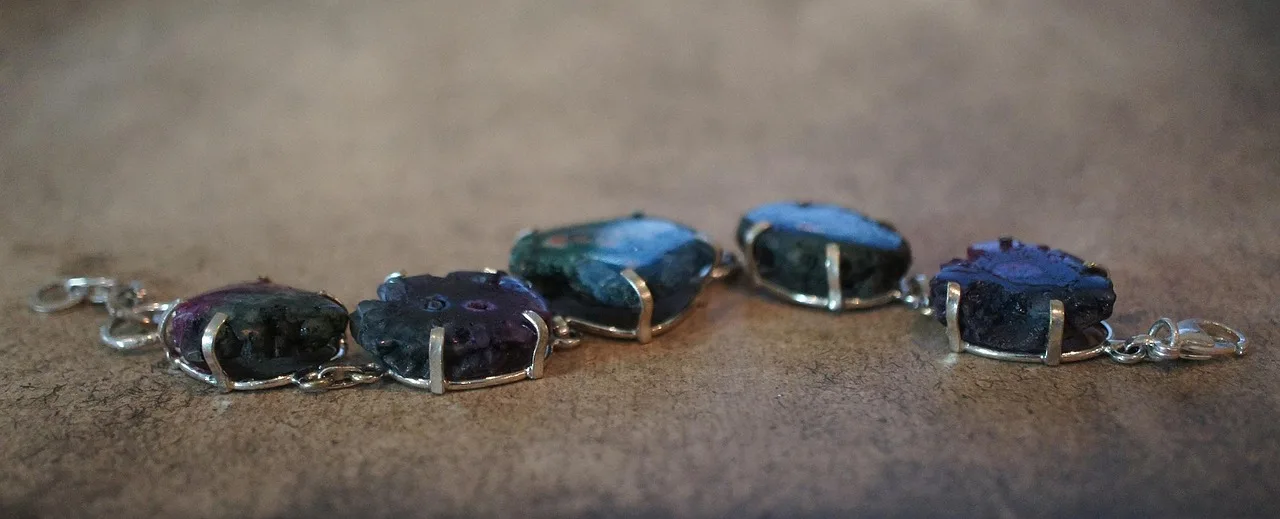
Bezel setting
A bezel surrounds much or all of the edge. It can shield a vulnerable girdle from direct knocks and reduce snag points. It also applies pressure around the stone during closure. An uneven wall, high spot, folded corner, or poor backing can tilt or damage the gem.
Choose it when the stone profile, wall access, design, and wear plan support controlled continuous contact. Avoid assuming that a tall wall cures a loose seat.
Prong setting
Prongs expose more of the stone and give cleaning access, but each prong and bearing carries a defined part of the holding job. The bearing should conform to the stone, and the tips should make sufficient, balanced contact without sharp snagging edges.
Prongs can suit irregular access or stones whose pavilion needs open space. They also require periodic inspection because wear, impact, or an overcut bearing can reduce security.
Flush setting
A flush-set stone sits within a seat cut into a thicker metal field. Metal at the rim is moved over the girdle. The mounting must provide sufficient depth below and around the stone without breaking through, thinning the opposite surface, or weakening a ring wall.
This method is best treated as a seat-and-structure problem, not a way to hide any stone inside metal.
Channel setting
Channel walls retain a row, with lower support beneath the stones. Uniform stone dimensions, rail continuity, end design, seat level, and spacing matter. One oversized or tilted stone can change the contact along the row.
GIA's melee design overview distinguishes channel, bead, pave, and prong styles and warns that channel and bead methods remove metal, so overcutting an under-engineered piece can weaken it. Its examples focus on melee and often platinum or diamond jewelry; silver dimensions and colored-stone limits need their own design.
Bead setting
Bead setting raises small pieces of metal to hold small stones, often in closely spaced layouts. Seat position, stone size matching, bead mass, crown contact, bright-cut walls, and the metal remaining between seats determine quality.
It suits repeated small-stone fields when enough metal exists for both seats and beads. It is a poor choice when the layout leaves fragile webs or cannot be cleaned and inspected.
Selection questions
- What stone area may safely carry support and holding pressure?
- Which edges need protection, and which surfaces must remain visible?
- How much metal can the seat remove while preserving the mounting?
- Can tools approach without crossing the stone or finished surfaces?
- Can the result be cleaned, inspected, and repaired during its expected use?
- Are matching practice stones and mountings available?
Common questions
Which setting protects a stone edge best?
A well-designed bezel can cover much of the edge, but poor fit or closure can still cause damage.
Is flush setting suitable for thin sheet?
Only if the full seat and remaining section meet the engineered design. Thin stock may not provide enough material.
Why do channel stones need consistent size?
The row shares wall and support geometry. Size variation can change level, spacing, and contact.
Are bead and pave the same?
Pave is a multirow bead-style arrangement. Terminology varies, so the drawing should state the exact seat and holding geometry.